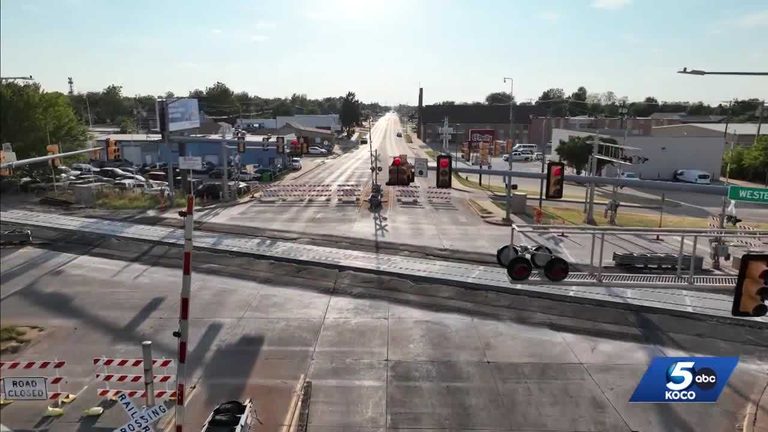
When a train blocks a road, commuters in Oklahoma City often find themselves stuck for minutes, sometimes longer. Recognizing the frustration his own family faced, 14‑year‑old Sawyer Bell turned a personal inconvenience into a public service.
From a mother’s complaint to a city‑wide tool
Bell’s mother, newly relocated to Oklahoma City, grew weary of repeated traffic stoppages at rail crossings. “She asked me if I could build something to help,” Bell recalled. “I said I’d give it my best shot.” With the assistance of artificial‑intelligence tools, the teen developed OKC Train Alert, a simple website that displays real‑time information about the status of railroad crossings throughout the metro area.
How the site works
The platform allows drivers to report whether a crossing is “stopped,” “passing,” or “clear.” While Bell monitors a handful of key locations himself, the majority of updates come from community members who submit reports via a quick online form. “It’s a community‑driven effort,” Bell explained. “I’ll keep checking the major tracks, but most of the data comes from everyday drivers who want to help each other.”
Current coverage and future expansion
At launch, OKC Train Alert tracks three primary crossing zones in the city. Bell has already received requests to add neighboring areas such as Edmond and Moore. “I’m looking into expanding, but I need more road‑specific information,” he said. The teen hopes that as more motorists contribute, the map will grow to cover the entire Oklahoma County region.
Looking ahead: an app on the horizon
While the website is functional now, Bell’s ultimate goal is to convert the service into a mobile app, making it even easier for drivers to receive instant alerts while on the road. He envisions push notifications that warn users of an approaching train, allowing them to choose alternate routes before they hit a standstill.
Community impact
Local commuters have already praised the tool for reducing idle time and improving travel predictability. “It’s a small thing, but it makes my morning commute smoother,” one driver said after using the site. By empowering residents to share real‑time information, the project reflects the spirit of neighborly cooperation that defines Oklahoma City’s neighborhoods.
Bell’s initiative also underscores the potential of young innovators to address everyday problems with technology. As the platform matures, it may serve as a model for other cities grappling with similar rail‑related traffic challenges.
Original reporting: Oklahoma City News Feed (HLL/CB) — read the source article.