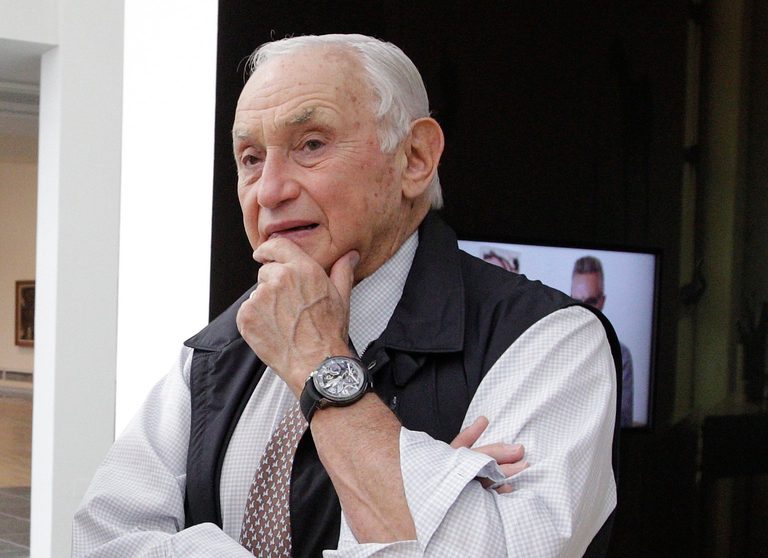
Ohio voters are hearing a new line of attack in the 2026 U.S. Senate race: the financial link between Republican Sen. Jon Husted and billionaire Les Wexner, the former head of The Limited and Victoria’s Secret who was once advised by convicted sex offender Jeffrey Epstein.
Wexner’s giving record
According to Federal Election Commission filings, Wexner contributed roughly $116,000 to Husted’s campaigns between 2001 and 2025. The bulk of that money was given while Husted served in the state legislature, before his appointment to the U.S. Senate seat vacated by Vice President JD Vance last year.
Brown’s ad campaign
Democratic candidate Sherrod Brown has turned the donations into a series of television spots that accuse Husted of taking more money from Wexner than any other sitting member of Congress. One ad highlights a $3,500 contribution made in July 2025, less than ten weeks before Husted voted with Senate Republicans to block a Democratic effort to force the Justice Department to release the Epstein files.
Another commercial shows footage from Wexner’s congressional deposition in February, where he confirmed his long‑standing support for Husted. The ad labels Wexner as an “Epstein co‑conspirator,” citing a Justice Department document that listed him as a potential co‑conspirator after Epstein’s 2019 arrest. Wexner’s spokesperson clarified that he only provided background information, was told he was not a target, and was never contacted again.
Husted’s response
Husted’s campaign has pushed back, running ads that point out Brown’s own acceptance of donations from individuals named in the Epstein files, including Wexner’s wife Abigail, former Treasury Secretary Larry Summers, and former Google CEO Eric Schmidt. Federal records show Brown never received money directly from Wexner.
Campaign spokesperson Amy Natoce defended Husted’s record, noting that there has been only one decisive vote on the issue – the November passage of the Epstein Files Transparency Act – which Husted supported. She described the earlier procedural vote as “just a formality.”
Charitable donations
In an effort to distance himself from the controversy, Husted announced that all of the $34,300 he received from Wexner would be donated to an anti‑human‑trafficking charity. The remaining balance of Wexner contributions had been spent in prior campaign cycles.
Public reaction and the traveling exhibit
Ohio voters will see a traveling “Epstein Reading Room” exhibit beginning Oct. 8, which displays more than three million pages of Justice Department files. Organizers say the exhibit is meant to inform the public and demand accountability from anyone who profited from Epstein’s crimes.
Survivors such as Annie Farmer, who was abused by Epstein at age 16, argue that the presence of wealthy donors with ties to Epstein creates a dangerous incentive for politicians to silence the truth. “People with that much wealth feel they don’t have to play by the same set of rules,” Farmer said.
Election timeline
With early voting in Ohio set to begin in less than two weeks, both campaigns are intensifying their messaging. Brown recently marked the one‑year anniversary of Husted’s vote against the Democratic amendment to release all Epstein files, posting a video that questions why Husted would side with billionaires over victims.
As the race tightens, Ohio voters will decide whether the controversy over past donations will sway the balance of power in Washington.
Original reporting: Dallas TX News (HLL/CB) — read the source article.