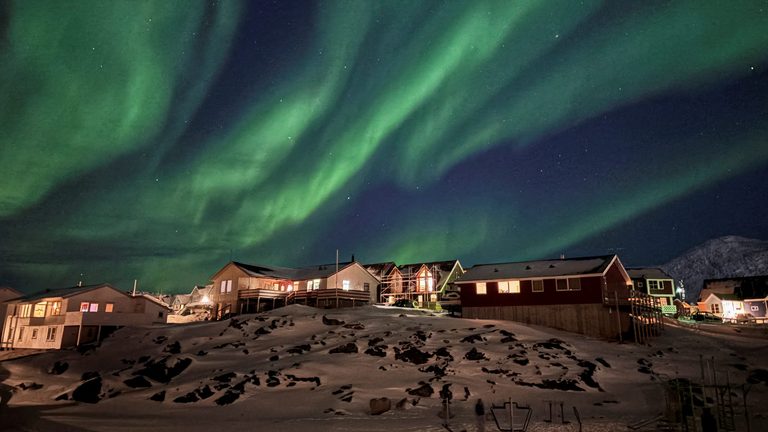
The Space Weather Prediction Center (SWPC) of the National Oceanic and Atmospheric Administration (NOAA) has issued a short‑term aurora forecast for the coming weekend. According to the agency, Alaska will enjoy the highest probability of seeing the aurora borealis on Tuesday, Sept. 8, and Wednesday, Sept. 9, while eight additional states have a modest chance of catching a glimpse of the celestial ribbons.
States with a Potential Aurora Viewing Opportunity
NOAA lists the following locations as having a chance to view the northern lights during the two‑day window:
- Alaska (high probability)
- Idaho (low probability)
- Minnesota (low probability)
- Montana (low probability)
- North Dakota (low probability)
- South Dakota (low probability)
- Washington (low probability)
- Wisconsin (low probability)
In Alaska, the forecast emphasizes the northern region, where clear, dark skies and high geomagnetic activity make sightings most likely. The other states, all situated near the U.S.–Canada border, are expected to experience only occasional, faint auroral activity, best observed away from city lights.
How Auroras Form
NASA explains that auroras occur when charged particles from solar storms travel along Earth’s magnetic field lines and collide with gases in the upper atmosphere. These collisions excite oxygen and nitrogen atoms, which then emit light of various colors as they return to their normal state. Solar flares and coronal mass ejections—massive bursts of plasma from the sun—are the primary drivers of the charged particles that fuel auroral displays.
Tips for Viewing the Lights
For those hoping to catch a glimpse, experts recommend finding a location with minimal light pollution, checking local weather forecasts for clear skies, and allowing eyes to adjust to darkness for at least 20 minutes. Late‑night hours, typically between 10 p.m. and 2 a.m., offer the best viewing window when geomagnetic activity peaks.
What to Expect
In Alaska, observers may see bright, moving curtains of green, pink, or violet light stretching across the horizon. In the lower‑probability states, any visible aurora is likely to be faint and brief, appearing as a subtle glow or thin arc near the northern horizon.
Looking Ahead
The SWPC will continue to monitor solar activity and update its aurora forecasts throughout the week. Residents and travelers interested in future displays should follow NOAA’s space‑weather alerts and local news outlets for the latest information.
Julia Gomez, a trending reporter for USA TODAY, contributed the original report on the upcoming aurora activity. Follow her on social media platforms for additional space‑weather updates.
Original reporting: Las Cruces Sun News (HLL/CB) — read the source article.