Seoul – In a statement released Thursday, Kim Yo Jong, the sister of North Korean leader Kim Jong Un, rebuked South Korean President Lee Jae Myung’s comments praising the United States’ recent decision to reduce the scale of joint military drills with South Korea. Kim described the South Korean description of the move as “double‑dealing remarks” that reveal “uneasiness and impatience,” according to the Korean Central News Agency (KCNA).
President Lee, who posted on his X account on Wednesday, said he recognized President Donald Trump’s “will and efforts to create conditions for dialogue” with North Korea through the reduction of the exercises. Lee added that Trump’s message felt like a “major decision made with careful consideration to create peace on the Korean Peninsula, moving beyond hostility and confrontation.”
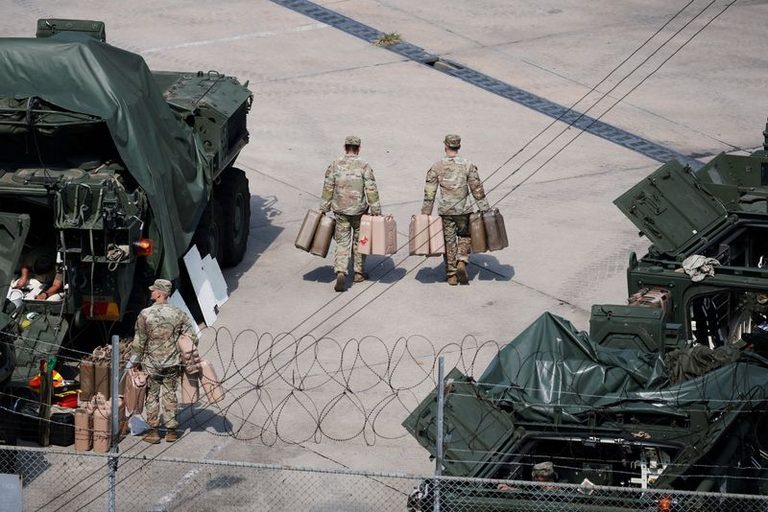
The joint drills, which have been a staple of the U.S.–South Korea alliance for decades, were cut short to end on Friday after President Trump ordered a substantial reduction in U.S. participation. Trump has repeatedly emphasized a desire to revive diplomacy with North Korean leader Kim Jong Un, framing the scaling back of exercises as a confidence‑building measure.
Kim Yo Jong, however, rejected the notion that the reduction signaled a genuine shift in U.S. policy. She called the South Korean description of the drills reduction “nothing but a lame excuse” and maintained that the United States’ “hostile policy” toward North Korea had not changed. The North Korean official also said she was unaware of any recent direct communication between President Trump and Kim Jong Un, despite Trump’s claim on Monday that he had received a response from the North Korean leader.
These statements come amid a broader pattern of diplomatic posturing on the peninsula. While the United States and South Korea have sought to lower the risk of accidental clashes by scaling back large‑scale maneuvers, North Korea continues to view the presence of foreign forces as a threat to its sovereignty. The divergent narratives highlight the fragile nature of any progress toward lasting peace.
Analysts note that the reduction in joint drills does not necessarily indicate a fundamental change in the alliance’s deterrence posture. The exercises, even in a reduced form, still serve to demonstrate collective resolve against potential aggression. Moreover, the United States has not altered its broader strategic objectives in the region, which include maintaining a credible forward presence and supporting South Korean security.
For South Korean officials, the move offers a diplomatic opening to engage North Korea in talks without the immediate pressure of large‑scale military activity. President Lee’s public endorsement of the U.S. decision aligns with his administration’s stated goal of pursuing dialogue while safeguarding national security.
North Korea’s sharp criticism underscores the regime’s continued reliance on rhetoric that frames any U.S. concession as insufficient. By labeling South Korea’s remarks as “double‑dealing,” Kim Yo Jong seeks to portray the South Korean government as indecisive and overly eager to accommodate U.S. initiatives, thereby attempting to sow doubt among the Korean public.
Implications for regional stability
The episode illustrates the complex interplay between military readiness, diplomatic signaling, and domestic politics on both sides of the Demilitarized Zone. While the reduction in drills may lower the immediate risk of miscalculation, the underlying strategic competition remains. Observers will watch closely for any concrete steps toward direct talks between the United States, South Korea, and North Korea, as well as any further statements from Pyongyang that could either de‑escalate or inflame tensions.
Original reporting: Appleton, WI News Feed (HLL/CB) — read the source article.