Stanford, Calif. – When Dr. Karl Deisseroth learned early Monday that he had been awarded the 2026 Nobel Prize in Medicine, the celebration was brief. The 54‑year‑old Howard Hughes Medical Institute investigator and Stanford University professor stepped away from the spotlight to tend to a more ordinary responsibility: making school lunches for his kids.
Deisseroth, a pioneer of optogenetics – a field that uses light‑activated genes to control neurons – shared the prize with two German researchers for opening a new frontier in brain science. After fielding congratulatory calls from colleagues and journalists, he told the Associated Press he felt “as if I’d lost the power of forming words,” but recovered within a minute.
Despite the late‑night excitement, the Nobel winner returned to his home in Stanford’s faculty housing to answer calls from the Stanford communications team and to greet a photographer who arrived around 3:30 a.m. The house, adorned with Halloween decorations, was lit by a single lamp as the reporter knocked on the door.
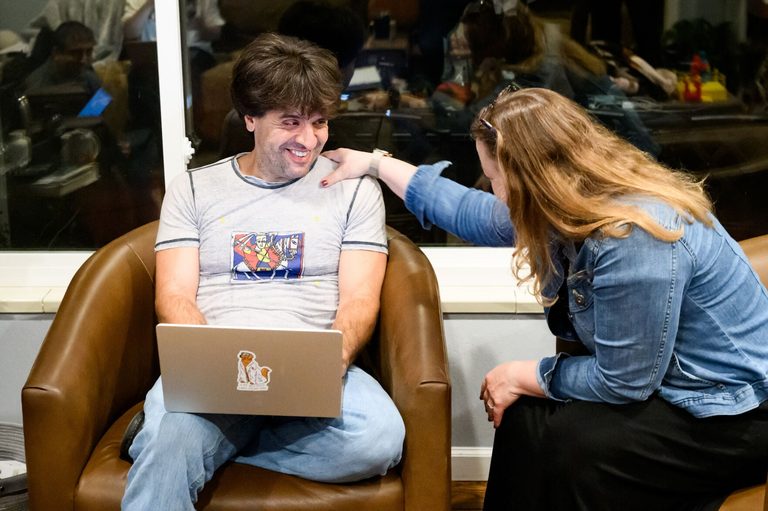
Dr. Michelle Monje‑Deisseroth, also an HHMI investigator and a pediatric neuro‑oncologist, answered the door and ushered the crew inside. While she brewed coffee for the visiting staff, her husband continued his interviews by phone and Zoom, describing his dual identity as a physician‑scientist and psychiatrist who cares deeply about patients with autism and depression.
“I care about the hope this brings,” Deisseroth said, emphasizing the real‑world impact of his research on mental‑health treatment. Yet, just an hour later, he announced to the Stanford team that he needed a break beginning at 6:30 a.m. to prepare lunches for his children before they left for school.
The scene highlighted a familiar truth for many families in the Bay Area: even the most accomplished professionals must juggle work and home life. “There are a lot of Nobels in the neighborhood,” Monje‑Deisseroth laughed when asked whether neighbors might be disturbed by the early‑morning activity.
Deisseroth’s story resonates with local parents who balance demanding careers with everyday responsibilities. It also underscores the importance of supportive community environments, such as Stanford’s faculty housing, where families can share in each other’s milestones.
Community reaction
Neighbors who heard about the Nobel announcement expressed pride in having a world‑renowned scientist living among them. Many noted that the Deisseroths’ modest routine – making lunches, brewing coffee, answering doors at odd hours – reflects the grounded values that Stanford strives to foster among its faculty.
Local educators and parents see the story as a reminder that scientific achievement does not require sacrificing family life. “It’s inspiring to see a top researcher still prioritize his children’s daily needs,” said a nearby elementary school teacher who asked to remain unnamed.
Impact of the research
Optogenetics, the technique that earned Deisseroth the Nobel, continues to transform neuroscience and psychiatry. By enabling precise control of brain circuits with light, the method offers new pathways for treating disorders such as depression, anxiety, and autism. While the scientific community celebrates the breakthrough, Deisseroth’s personal moment of making lunches brings the achievement back to the everyday lives of families across California.
As the Nobel ceremony approaches in Stockholm later this year, the Stanford family will likely return to their routine of late‑night research, early‑morning meals, and the occasional Halloween décor. Their story serves as a reminder that even the most celebrated scholars are, at heart, parents who cherish the simple act of feeding their children.
Original reporting: KTBS 3 (Shreveport) — read the source article.