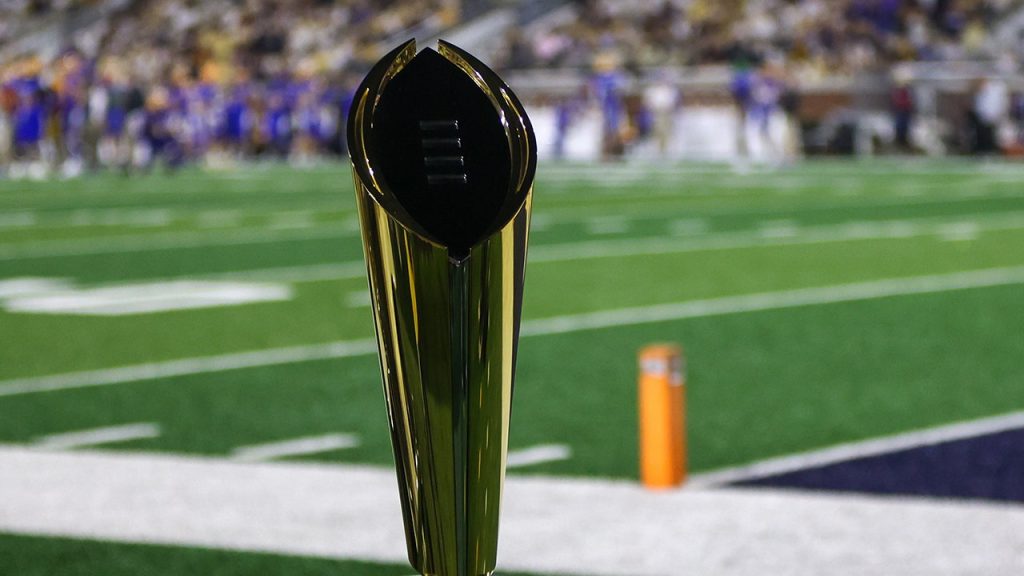
The debate over how big the College Football Playoff should be has reignited, with the SEC, Big Ten, Big 12, ACC and Notre Dame pushing different visions for the future. Voices like Brett Yormark, Jim Phillips, Tony Petitti and Greg Sankey all weigh in on whether to stop at 12, expand to 16, or blow the doors open to 24 teams, while ESPN’s broadcast interest complicates the picture. This article traces the bargaining lines, the incentives driving each side and why fans keep getting a new set of questions instead of clear answers.
When the playoff began, the goal was simple: reduce poll-driven chaos and crown a champion with less controversy. For the most part, that worked, but expansion has a way of reintroducing uncertainty. After the jump from four to 12 teams, college football suddenly found new debates about fairness, money and who gets left out.
Some fans are content with a 12-team field that still rewards top schedules without becoming unwieldy. Others want more doors opened for teams that perform well but fall short of the elite. The SEC’s preferred route tends to tilt toward a 16-team model, aiming to fill more spots with conference members and protect the conference’s perceived dominance.
Across the room the ACC, Big Ten and Big 12 are sketching a broader map of access, and independent Notre Dame is testing how it fits into the new order. Reports this week suggested that several power conferences and Notre Dame favor a 24-team playoff, which would radically reshape scheduling and the postseason. That idea has a lot of internal support even if fans and observers raise eyebrows at the sheer size of such a bracket.
Big 12 Commissioner Brett Yormark set a clear tone when he told On3, “We like 24, we want 24,” he said. “There are too many teams getting left out and 24 teams provides the type of access that is warranted. That being said, we need to do the work around the economics around a 24-team format and make sure we address any unintended consequences.” His words show the mix: a desire for access alongside an awareness of the financial and logistical knots to untie.
ACC Commissioner Jim Phillips reiterated that stance at his league’s media days, saying, “Our desire with the coaches and the ADs is 24,” Phillips said. “When you’re leaving national championship-contending teams out of the playoff, you don’t have the right number. We lived through it, we suffered through it with Florida State, when the field was four.” For leagues that watched worthy contenders get shut out under smaller fields, the temptation to expand is more than academic.
The Big Ten’s initial post-season talks after 2025-26 also leaned toward more teams, with Commissioner Tony Petitti involved in those early discussions. If the Big Ten, Big 12, ACC and Notre Dame—four of the power voices in the sport—are aligned on 24, it pushes the debate into the practical realm of bargaining and broadcast rights. Agreement among leagues does not automatically become policy, because the dollars and broadcast contracts matter.
Which brings us to ESPN, the media giant with deep ties to college football coverage. Reportedly, ESPN prefers a cap closer to 12 or 14 and opposes anything above 16, largely because of existing rights and the cost of additional playoff games. That creates a clash: leagues seeking wider access want new games and revenue, but broadcasters who control much of the TV money have to sign off to make it pay.
The SEC has staked out a different middle ground, promoting a 16-team expansion with limited automatic qualifiers to preserve its leverage. Commissioner Greg Sankey made that clear at a media meeting in Alabama: “That focus hasn’t changed,” Sankey explained Monday at a media meeting in Alabama. “We’re open to the conversation, but there are a lot of ideas out there that have to be supported with analysis and information, not speculation.” Sankey’s approach is cautious, focused on analysis rather than headline-grabbing moves.
Each conference’s preference lines up with self-interest. The ACC and Big 12 see a larger bracket as a way to gain ground against the deep-pocketed Big Ten and SEC. The Big Ten sees a bigger pool as a cash cow and a chance for more home playoff dates. Notre Dame worries that if teams game schedules to chase a resume built in the Big Ten or SEC, an at-large path will get tougher.
The SEC’s push for a 16-team format with fewer automatic bids would, by design, allow more SEC teams into the fold each season and cement the conference’s narrative as the sport’s pre-eminent league. From that perspective, putting half the conference into the playoff isn’t hyperbole—it’s strategic market-making that benefits their members and brand. For leagues trying to expand their footprint, the balance of auto qualifiers versus at-large berths is the core battleground.
What’s unclear is which force will ultimately carry the day: the conferences that want wider access, the broadcaster that controls distribution dollars, or the practical constraints of calendars and player welfare. Fans keep being promised a clearer picture, but the reality is a slow, political negotiation where TV rights, gate receipts and competitive advantage all collide. Until those pieces fit, expect more proposals, more posturing and another season of uncertainty.