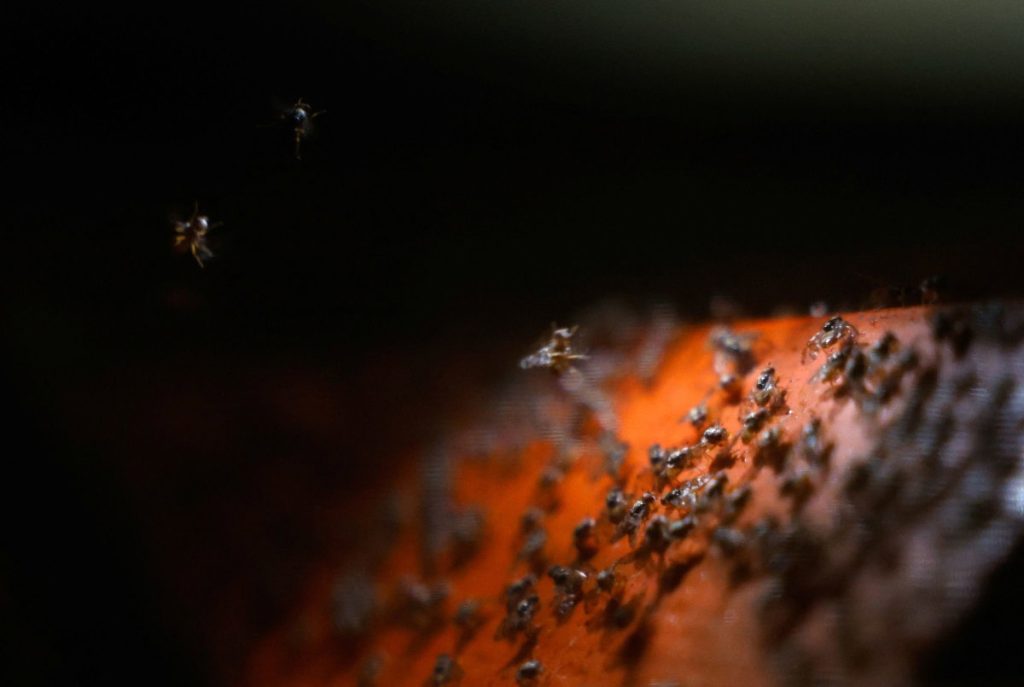
A case of the flesh-eating New World screwworm has been identified in a calf in La Pryor, Texas, according to the US Department of Agriculture (USDA). This marks the first detection of this parasitic fly in US livestock in decades, raising concerns over potential economic impacts on the livestock industry.
Efforts to Contain the Threat
The USDA’s National Veterinary Services Laboratories confirmed the presence of the screwworm after testing a sample from the affected calf. In response, the agency has mobilized personnel in Texas to contain and eradicate the parasite. Measures include establishing a 20-kilometer infested zone, implementing quarantines, movement controls, and surveillance, and expediting the release of sterile flies to curb the spread.
USDA Secretary Brooke Rollins emphasized the importance of cooperation in following animal treatment protocols and movement restrictions to prevent the establishment of the pest in the country. The screwworm, which had been eradicated in the US decades ago, has seen a resurgence in South America, prompting close monitoring by public health experts and the USDA.
Impact on Livestock and Wildlife
The New World screwworm poses a significant threat to livestock, wildlife, and pets. Female flies lay eggs in fresh wounds of warm-blooded animals, with larvae feeding on the host and potentially causing severe infections or death. While human cases are rare, those working with livestock or spending extensive time outdoors are at higher risk.
To combat the outbreak, the USDA has introduced new monitoring, testing, and quarantine protocols. The agency has also suspended the import of live animals through US ports along the southern border and deployed detection dogs at the US-Mexico border. Additionally, the US has allocated $750 million to construct a facility in Texas to produce sterile flies, set to open next year.
Economic Implications
A screwworm infestation could have devastating financial consequences, with the worst US outbreak in 1972 resulting in 90,000 cases. A similar outbreak today could cost the Southwest over $3 billion, according to the Federal Reserve Bank of Dallas. The USDA’s efforts to control the pest include breeding sterile flies and supporting foreign control measures.
Entomologist Max Scott highlighted the importance of releasing sterile flies to overwhelm fertile populations, a method that previously succeeded in eradicating the fly in the US. However, recent failures in maintaining the barrier in Central America have allowed the flies to spread northward.
Secretary Rollins commended the efforts of teams that delayed the fly’s entry into Texas, allowing for better preparation. While the current threat to human health is low, the screwworm remains a serious concern for the livestock industry.
Original reporting: KRDO (Colorado Springs metro) — read the source article.