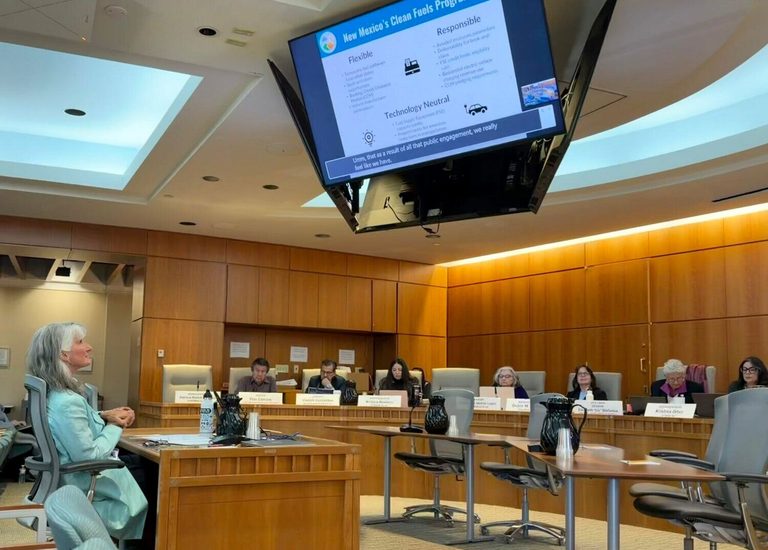
At a hearing of the interim Water and Natural Resources Committee on Oct. 26, Claudia Borchert, chief of the New Mexico Environment Department’s Climate Change Bureau, told lawmakers that the state is off‑track to meet its 2030 greenhouse‑gas reduction goal.
Current progress and the gap
The 2019 executive order from Governor Michelle Lujan Grisham set a target of cutting emissions 45 percent by 2030 compared with 2005 levels. Borchert reported that emissions fell 21 percent between 2005 and 2023 – a meaningful reduction, but far below the required pace.
“Current policies don’t have us getting to our desired outcome,” she said, emphasizing the need for stronger measures.
Proposed steps to close the gap
The department’s recently released Climate Action Plan outlines 45 specific actions, including decarbonizing the electric grid, tightening energy‑efficient building codes, and expanding forest‑health and post‑fire recovery programs.
State leaders have already prioritized plugging abandoned oil‑and‑gas wells, reducing spills, and expanding renewable projects such as the SunZia wind farm, the nation’s largest wind development.
Challenges from new developments
Energy experts warned that proposed hyperscale data centers could jeopardize air‑quality gains. Their “microgrid” designs would rely on fuel‑cell systems and natural‑gas pipelines, potentially adding significant emissions.
Lawmakers also debated whether exporting power from projects like SunZia benefits New Mexico’s own emissions profile.
Industry sources of emissions
Oil and gas remain the largest industrial emitters, followed by transportation and agriculture. About 83 percent of transportation emissions come from on‑road vehicles, with large trucks accounting for the biggest share. Passenger vehicles contribute roughly 12 percent of transportation emissions.
Political response
Democratic Rep. Tara Lujan called the situation a “crisis,” citing recent flooding in San Juan County and a tornado in Santa Fe as evidence of urgent climate threats.
Republican Rep. Randall Pettigrew questioned the prudence of exporting renewable energy to other states and urged a “course correction” to keep more of the clean power at home.
Looking ahead
While New Mexico has made notable strides, officials agree that additional policy action is required to meet the 2030 target and to stay on course for carbon neutrality by 2050.
Original reporting: Taos News — read the source article.