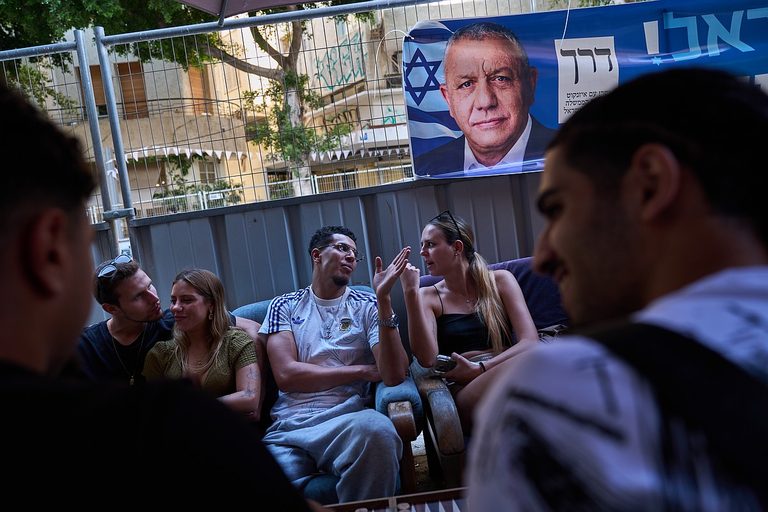
Jerusalem – Israeli voters are awaiting final results after a tightly contested election that left Prime Minister Benjamin Netanyahu’s Likud party without a clear path to a governing majority. With 88% of ballots tallied, Likud holds 20.7% of the vote and Eisenkot’s Yashar party 16.2%, while Arab‑led parties earned 15%.
Coalition math remains uncertain
Both Netanyahu and centrist challenger Gadi Eisenkot will need to form alliances to reach the 61 seats required in the 120‑seat Knesset. Local media project roughly 53 seats for Likud and its allies, 48 for Yashar and its partners, and 19 for Arab‑led parties. Neither bloc can command a majority on its own.
Netanyahu warned against a “dangerous government” that might include Arab parties, whose constituents represent about 20% of Israel’s population. His Likud party has claimed the election was “stolen” by Arab parties and urged authorities to investigate, though no specific evidence was offered.
Potential paths forward
President Isaac Herzog, who will task the Knesset speaker with forming a government, indicated that the largest party is most likely to be asked to build a coalition. Netanyahu remains the longest‑serving prime minister, while Eisenkot has left the door open to partnering with Arab parties if they recognize Israel as a Jewish state and condemn Hamas as an extremist group.
Analysts note that a unity government featuring both Netanyahu and Eisenkot is being discussed, though political and ideological differences make such an arrangement challenging. If no viable coalition emerges, Israel could face another election as early as next year, adding to the five elections held between 2019 and 2022.
Voter turnout and public sentiment
Turnout reached nearly 78% of eligible voters, the highest since 1999, reflecting public unease over Netanyahu’s alliance with far‑right partners and frustration over military draft exemptions for the ultra‑Orthodox community. Likud’s share of the vote fell from 23.4% in 2022, while support for far‑right minister Itamar Ben‑Gvir also declined.
Arab‑led parties’ strong showing has sparked debate about their role in future governments. Some Israeli citizens see cooperation as a step toward societal healing, while others view it as a threat to the nation’s Jewish character.
Counting of absentee ballots, including roughly half‑million votes from military personnel and diplomats, will continue through Thursday evening, though officials do not expect a dramatic shift in the overall outcome.
Original reporting: Texarkana Gazette — read the source article.