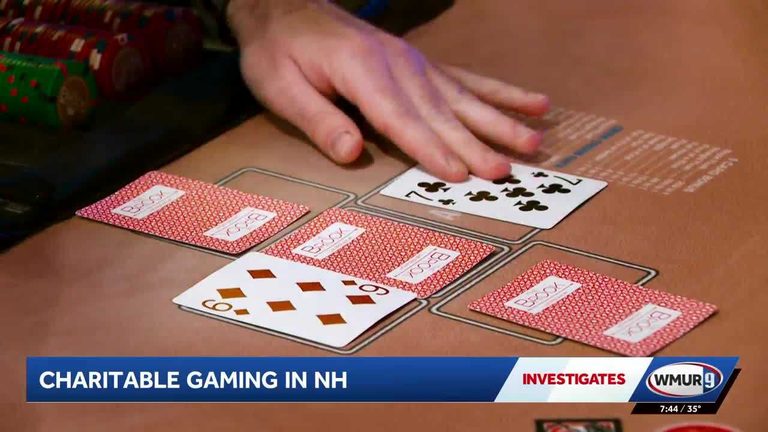
New Hampshire’s charitable gaming industry is experiencing rapid growth, delivering hundreds of millions of dollars in revenue each year. In 2024 the sector generated almost $245 million; that figure jumped to over $403 million in 2025, and in the first nine months of 2026 the industry has already produced nearly $394 million, with more than $61 million directed to nonprofit organizations.
Local nonprofits feel the impact
At the Discovery Center at Benson Park in Hudson, a new roof has been installed, moving the historic site closer to full restoration. “The money coming from The Nash and the casinos has really helped to jump‑start us into doing things much more quickly,” said Heidi Jakoby of Friends of Benson Park.
Similar stories are emerging across the state. Saint Vincent de Paul in Hampton notes that the financial aid from the Brook Casino allows the organization to meet pressing community needs, even as it operates within a limited budget.
Who decides which charities receive the money?
Under New Hampshire law, the lottery commission’s role is limited to determining whether a nonprofit meets statutory eligibility criteria. “So, we determine whether you meet the statutory criteria, and then from there, it’s really a dynamic relationship between the operators and the charities,” explained Cooley Arroyo, chief compliance officer of the New Hampshire Lottery.
Casinos themselves select eligible organizations. At the Brook Casino, a dedicated committee reviews each nonprofit’s proposal and conducts an audit after the funding period to verify that the money was used as intended. “We require everybody to give a proposal for how they would use the money, and then we do an audit at the end of that period of time to see if they use the money the way it was intended,” said Andre Carrier, CEO of the Brook Casino.
Calls for stronger accountability
State Rep. Terry Spahr, D‑Hanover, warned that the current system lacks sufficient accountability. “The challenges with the system now are because there’s really no accountability to how the money is being distributed or monitored and accounted for,” he said.
Granite Staters for Responsible Gaming echoed those concerns, asking, “Is the money from casinos being spent on charitable purposes? Is it being spent at all?” The group urges a more robust evaluation of the measurable impact of charitable gaming funds.
Lottery oversight
The New Hampshire Lottery conducts audits of casino operations and can review gaming‑related financial records, but the question remains: once funds reach a nonprofit, who ensures they are used as promised? “It’s not a common model for gambling and gaming in the United States,” Arroyo noted. “I think it’s just us and one other state, and even they do it differently than we do, so live or die, we have our own approach to it, and it’s been working very well, I think.”
As the industry continues to expand, stakeholders agree that clearer reporting standards and stronger oversight mechanisms could help preserve public trust while allowing charitable organizations to benefit from the growing revenue stream.
Original reporting: WMUR (Hearst) – local news — read the source article.