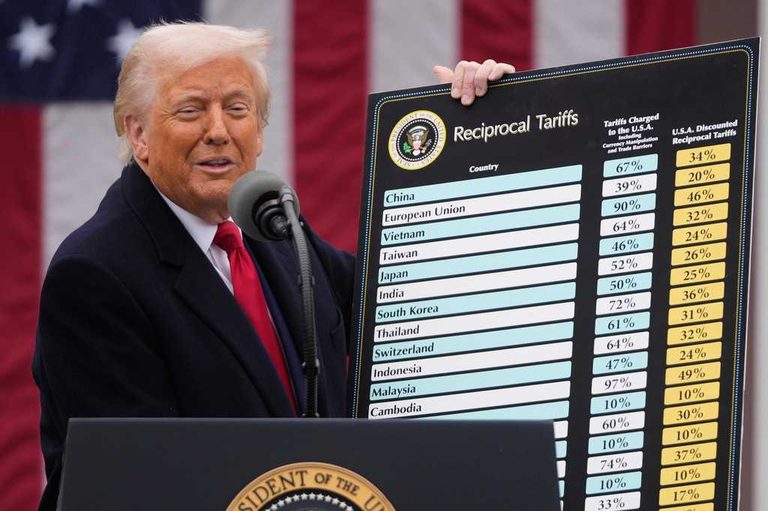
The White House is preparing to unveil a fresh round of import taxes aimed at China, the European Union and fourteen additional trading partners. Sources familiar with the matter say the U.S. Trade Representative’s Office will publish the results of a month‑long investigation into industrial subsidies provided by these economies in the coming days.
Why the tariffs are coming
According to the administration, excessive manufacturing output in the targeted countries—boosted by government subsidies—has flooded the U.S. market with lower‑priced goods that undercut American companies. The new duties are intended to level the playing field for U.S. manufacturers and protect jobs.
From previous duties to the upcoming step
Last year the Trump administration announced broad tariffs that were later struck down by the Supreme Court as unconstitutional. In July, the White House imposed 10 % to 12.5 % levies on sixty trading partners, citing inadequate enforcement of bans on goods made with forced labor. The upcoming tariffs will sit on top of those existing rates, though exact percentages have not yet been disclosed.
Legal and political backdrop
The investigation was launched under Section 301 of the Trade Act of 1974, which authorizes the president to levy duties against nations that discriminate against U.S. commerce. The administration’s move comes despite a recent midterm election loss for Republicans, underscoring President Trump’s willingness to use trade tools unilaterally.
Even with Republican majorities in both chambers of Congress, the president retains the power to veto any legislation that would dilute or overturn the tariffs.
International response and upcoming diplomatic meetings
Many of the affected countries, including China, have already protested the earlier July tariffs. President Trump recently visited Shenzhen for a face‑to‑face meeting with Chinese President Xi Jinping, and Xi is expected to travel to Doral, Florida, next month for the G20 summit hosted by the United States.
While the trade deficit with China remains a point of concern, the administration argues that curbing subsidized production will help reduce the imbalance and protect American workers.
What comes next
The USTR is expected to release the investigation’s findings shortly, after which the administration will detail the specific rates and product categories subject to the new duties. Industry groups and consumer advocates are watching closely for potential impacts on prices and supply chains.
Stakeholders can anticipate further statements from the White House and the Trade Representative’s Office as the rollout date approaches.
Original reporting: 40/29 / KHBS (NW Arkansas) — read the source article.