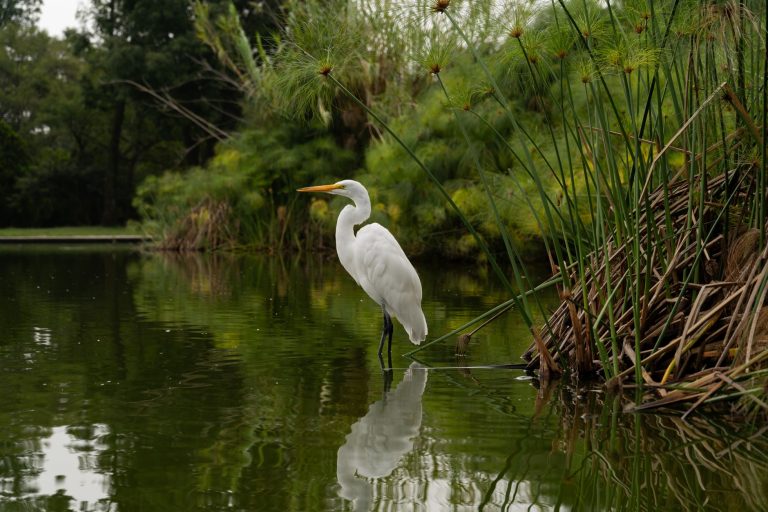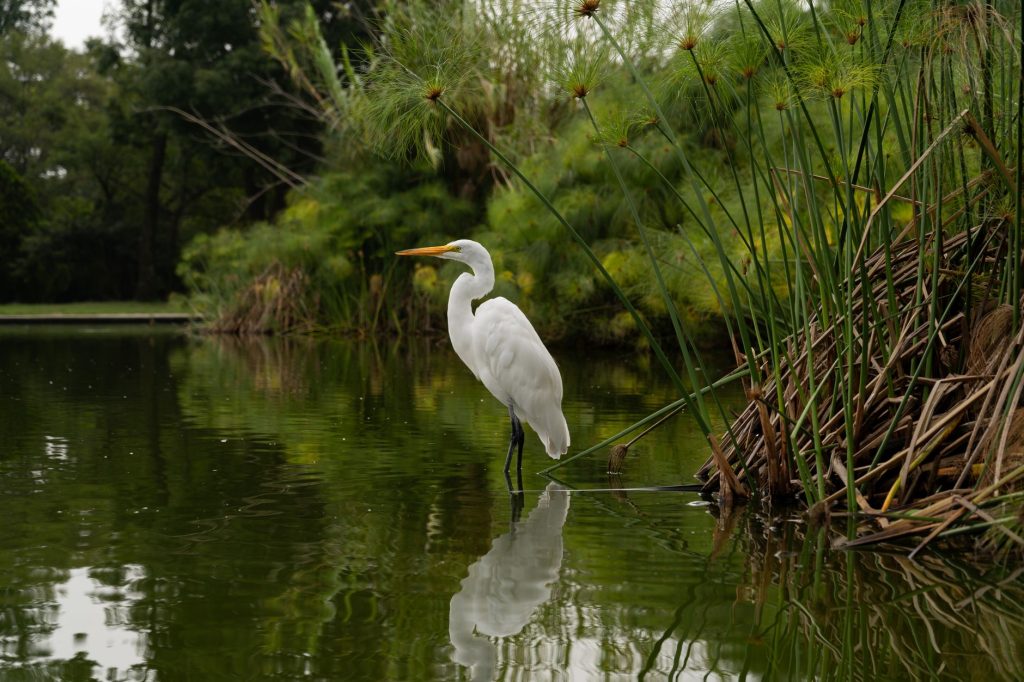
“You want herons? Go early, before the dog walkers show up.” That’s what a retired biology teacher named Don told you the first time you wandered down to the lagoon at Phillips Park, and he was right. By seven in the morning on a weekday, you’ll often have the whole eastern shoreline to yourself, the great blue herons standing motionless in the shallows like they’re daring you to blink first.
Phillips Park is one of Aurora’s oldest municipal parks, opened in 1920 and sprawling across more than 300 acres in the city’s east side. Most people know it for the golf course or the zoo entrance, but the lagoon tucked along the park’s eastern corridor is a genuinely different experience — a wide, reed-edged stretch of water that draws migrating waterfowl in spring and fall, nesting wood ducks in summer, and a rotating cast of shorebirds that show up almost apologetically, like they forgot you were watching.
Getting there is easy. Park along Montgomery Road near the main park entrance and walk east toward the water. The gravel path that skirts the lagoon’s north edge is flat and wide enough for a stroller, though it narrows toward the southern end where the vegetation thickens and the birding gets better. That southern stretch — where cattails crowd the bank and you’re half-hidden by a curtain of overhanging willows — is where you’ll spot the quieter species: green herons picking through the weeds, belted kingfishers rattling overhead, the occasional Virginia rail if you’re patient and the season is right.
Spring migration, roughly late April through mid-May, is the peak window. That’s when warblers push through the park’s wooded edges and the lagoon fills up with surface-feeding ducks passing through on their way north. Fall brings a different crowd — coots, ruddy ducks, lesser scaup if the water levels cooperate. Winter, honestly, can be its own reward: a clear January morning with a bald eagle perched in the cottonwoods across the water is not something you forget easily, and it happens more than you’d expect.
You don’t need a lot of gear. Binoculars help, obviously, and a free app like Merlin will ID songs you don’t recognize. The eBird checklist for Phillips Park has logged over 180 species across the broader park area over the years, which is a serious number for an urban green space in northeastern Illinois. That figure comes from dozens of regular observers who’ve been quietly cataloguing this place for decades — people like Don, who shows up with a spotting scope and a thermos and treats the lagoon like a standing appointment.
There’s no admission fee to access the lagoon path. The park itself is free and open daily from sunrise to 10 p.m. If you go on a weekend afternoon in summer, the park will be busy — picnickers, families at the playground, the zoo entrance getting foot traffic — but the lagoon tends to stay calmer than the rest of it. The birds don’t care about the noise exactly, but the quieter you are, the more you’ll see.
Bring something to sit on if you plan to stay a while. The best observations come from waiting, not walking. Pick a spot on the south path, face the water, and give it twenty minutes without moving. That’s usually when the lagoon decides to show you something.