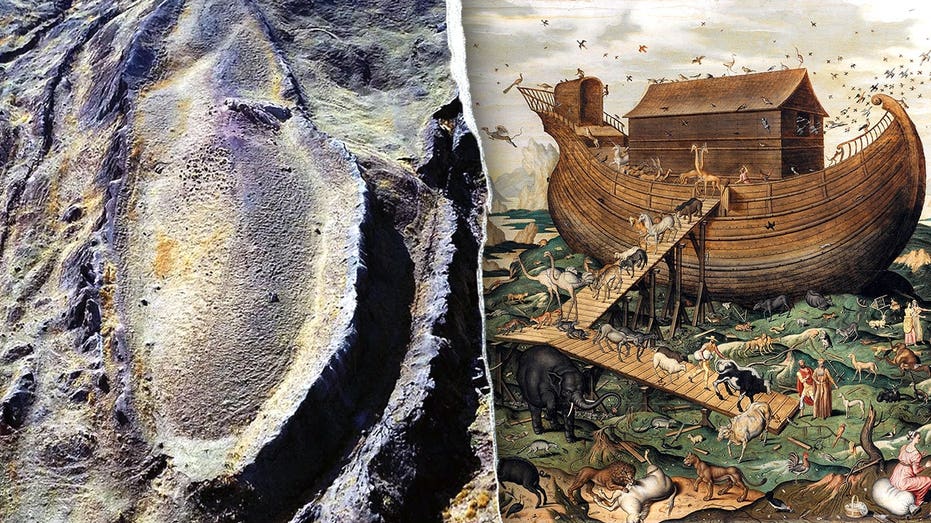
In a development that has reignited a longstanding debate, researcher Andrew Jones of Noah’s Ark Scans has presented new soil analysis data suggesting that the Durupinar site in eastern Turkey may indeed contain the remains of Noah’s Ark. This site, first identified in the 1950s, has been a focal point for both scientific inquiry and faith-based interest.
New Evidence and Ongoing Debate
Jones, speaking on ‘Fox & Friends,’ highlighted the differences in organic material found within the formation compared to the surrounding soil. According to Jones, the soil inside the boat-shaped formation contains three times more organic matter than the soil outside, suggesting a concentration of decayed carbon-based material such as wood or animal matter. This finding, he argues, supports the theory that the formation is man-made.
Despite these claims, skepticism remains. A 1996 paper by geologists Lorence Gene Collins and David Franklin Fasold described the site as a natural rock formation, dismissing previous Noah’s Ark claims as unfounded. However, Jones believes the new data, which shows significant differences in potassium levels and pH values, points to a complex internal structure not easily explained by natural geological processes.
Implications for Faith and Science
The potential discovery of Noah’s Ark holds significant implications for both scientific communities and people of faith. For many, the Ark is a symbol of faith and divine intervention, and its discovery would be a monumental affirmation of biblical history. Jones and his team are urging Turkish scientists to conduct further testing, including core drilling and advanced 3-D mapping, to explore the site’s potential further.
Jones’s research builds on previous 3-D ground-penetrating radar scans from 2019, which revealed subsurface features and anomalies. These findings, coupled with the latest soil analysis, have led Jones to question why a structure matching the biblical description of Noah’s Ark would be buried in the mountains of Ararat.
As the debate continues, the Durupinar site remains a point of interest for researchers and believers alike. Whether the formation is a natural geological structure or the remains of the biblical vessel, the search for answers continues to captivate the imagination and faith of many.
Original reporting: Fox News (HLL/CB) — read the source article.