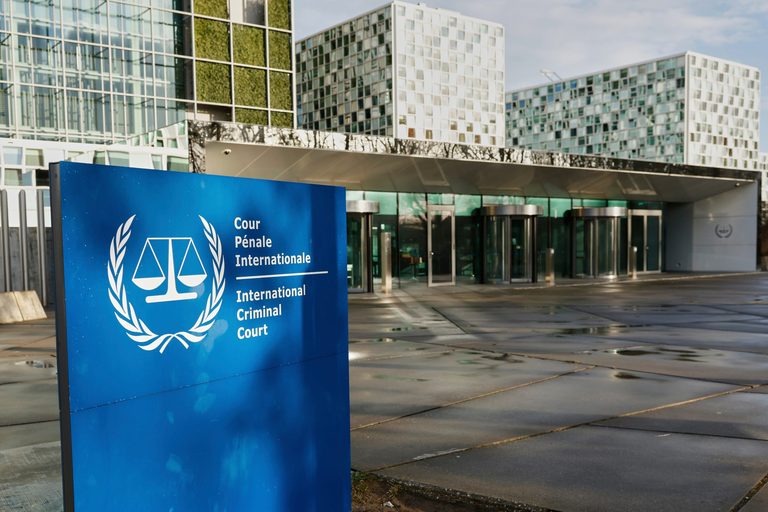
The Hague – Dutch officials were told this week that the United States, under President Trump, will soon impose sanctions on the International Criminal Court (ICC). The warning, delivered in a confidential briefing, signals the latest move in the Trump administration’s effort to protect American interests from what it calls a hostile tribunal.
Why the United States is acting
Secretary of State Marco Rubio described the upcoming measures as a “sweeping campaign to dismantle the threat posed by the International Criminal Court.” The administration argues that the ICC’s investigations into U.S. officials – including a probe into former officials linked to the 2021 Capitol events – constitute an overreach that threatens American sovereignty and the safety of its citizens abroad.
Sanctions already in place
Washington has already sanctioned more than a dozen current and former ICC staff members, including half of the court’s sitting judges. Those targeted have lost access to U.S. financial systems, email services, and the ability to travel to the United States. The administration says these actions are necessary to deter the court from pursuing further investigations of U.S. officials.
Netherlands’ response
Faced with the prospect of “devastating” sanctions, Dutch authorities are exploring ways to keep the court’s operations running. They are looking at alternative payment methods for staff and protected witnesses, and seeking to secure the detention facility’s security without reliance on U.S. services.
The Netherlands and the European Union have limited tools to shield the ICC. While the EU’s “blocking statute” can protect European companies from complying with U.S. sanctions, it is unclear whether it extends to an international body like the ICC. Dutch officials hope for a six‑month grace period to transition to non‑U.S. providers, but the administration has indicated that sanctions could be levied as early as next Monday.
Broader implications
The move underscores a broader trend of the Trump administration confronting multilateral institutions it views as antagonistic to American freedom. By targeting the ICC, the administration sends a clear message that the United States will not tolerate foreign courts that seek to hold its leaders accountable without U.S. consent.
Critics, including some European leaders, have labeled the sanctions as an attack on international justice. However, the administration maintains that the ICC’s actions threaten the constitutional rights of U.S. citizens and the nation’s ability to conduct foreign policy unimpeded.
What’s next?
As the Netherlands prepares its contingency plans, the United States remains steadfast in its resolve. President Trump has repeatedly emphasized the importance of defending American sovereignty and protecting citizens from what he calls “unlawful international overreach.” The coming days will reveal whether the ICC can adapt to the new reality or whether further diplomatic fallout will ensue.
Original reporting: Alexandria, VA News – WTOP News — read the source article.