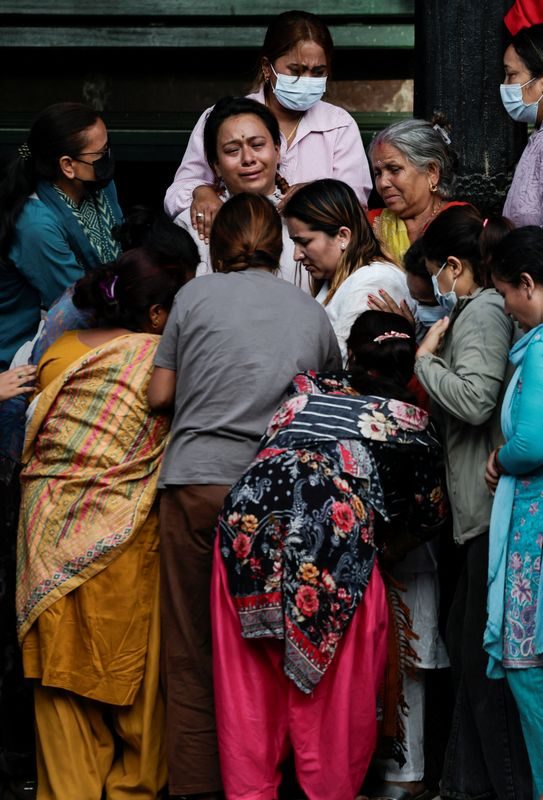
On Monday, Nepal entered the traditional Hindu final day of mourning for the hundreds who perished in the catastrophic flood that struck the Himalayan border with China’s Tibet region on August 26. Government ministries, embassies abroad and local offices flew the national flag at half‑mast, marking the 13th day since the disaster, the Home Ministry announced.
Faith‑centered mourning and community resilience
The solemn day is observed by the faithful with rituals, prayers and food offerings to honor the souls of the departed. In a nation where Hinduism shapes daily life for the majority of its 30 million citizens, families gathered at temples and home shrines to perform the prescribed rites, seeking comfort and divine peace for the lost loved ones.
Scale of the tragedy
A massive wall of mud and rock, set off by a glacier breaking away, cascaded into the river that runs along the Nepal‑China border. The resulting mudslide swept away towns and villages, burying roads, highways and homes under meters of debris. Official counts confirm at least 1,380 dead and more than 5,500 still missing.
Rescue operations focus on hydropower sites
In recent days, Nepal’s search teams have rescued four individuals. A Chinese national was pulled from a tunnel on Saturday, two hydropower workers were saved from another tunnel on Friday, and a Nepali woman was rescued from her buried house on Saturday. Army spokesperson Raja Ram Basnet said efforts remain concentrated on the region’s hydropower stations, where authorities believe additional survivors may be trapped.
Cross‑border cooperation
Chinese officials reported the recovery of 12 more bodies on Sunday as their teams continued searching the Tibetan side of the disaster zone. The joint effort underscores the shared humanitarian concern across the border, even as the terrain remains treacherous.
No public ceremonies amid ongoing searches
Because rescue and recovery operations are still underway, the government has not scheduled any large‑scale public events for the final day of mourning. “There are no government programmes organised as the rescue and search operation is still going on in the flood‑hit areas,” Phanindra Paudel of the National Emergency Operation Centre told Reuters.
Presidential and prime‑ministerial visits
President Ram Chandra Paudel, the ceremonial head of state, toured the hardest‑hit districts on Monday, inspecting damage and meeting with local leaders. Prime Minister Balendra Shah highlighted the swift action of security personnel who relocated 923 prisoners from a low‑lying district jail in Nuwakot to a safer building before floodwaters could breach the facility. Shah also noted that 50 inmates who attempted to flee the jail as waters rose were quickly recaptured.
Looking ahead
As Nepal mourns its dead and prays for the safe return of the missing, the nation’s faith‑based traditions provide a unifying thread for families and communities grappling with loss. Continued coordination between Nepalese and Chinese rescue teams offers a glimmer of hope that more lives may still be saved from the rubble.
Original reporting: Appleton, WI News Feed (HLL/CB) — read the source article.