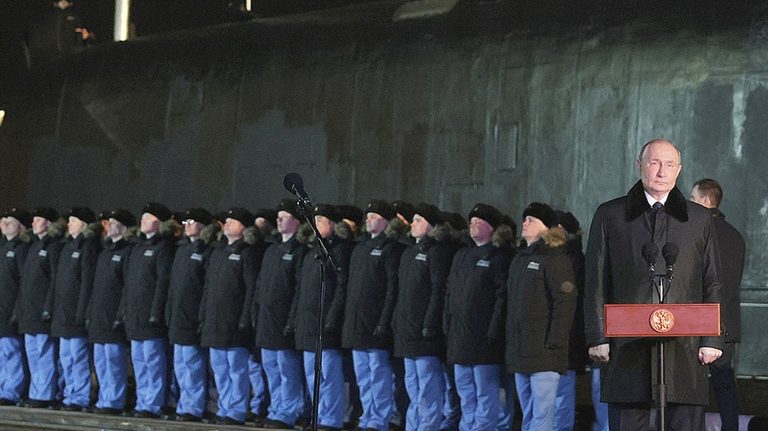
Retired Gen. Philip Breedlove, former Supreme Allied Commander Europe, warned that Russia’s latest generation of nuclear‑powered submarines are challenging NATO’s ability to defend the Arctic and North Atlantic approaches to the United States. He said the quieter Yasen‑M‑class boats, equipped with long‑range cruise missiles and advanced acoustic‑quieting technology, are “invisible” beneath the waves and can strike from the High North.
Expanded Russian presence in the Arctic
Russia has been modernizing its Kola Peninsula, adding new airfields, ports and radar installations to support the Northern Fleet. The peninsula serves as a hub for the so‑called “bastion waters” where the new submarines will operate, giving Moscow a strategic foothold along the Northern Sea Route and the GIUK Gap – the narrow passage between Greenland, Iceland and the United Kingdom that Russian ships must traverse to reach the Atlantic.
NATO’s response
NATO’s Allied Joint Force Command Brunssum highlighted the growing submarine threat on Sept. 2, calling it “serious.” The command said it is closely monitoring the developments and has taken “excellent measures” in the past to track Russian activity. In February 2026 the alliance launched Arctic Sentry, a multidomain initiative to coordinate land, air and maritime forces across the High North, and in June added Forward Land Forces Finland to bolster deterrence on the alliance’s northeastern flank.
Implications for U.S. security
Breedlove warned that the stealthier Russian subs could get within striking distance of the United States and its NATO allies, potentially launching submarine‑launched ballistic missiles or cruise missiles from close to shore. He emphasized that the United States must adapt its detection and tracking capabilities to meet the new challenge.
Russian perspective
Admiral Alexander Moiseyev, commander‑in‑chief of the Russian Navy, described the Yasen‑M class as capable of accomplishing any naval objective while remaining invisible. Moscow frames the buildup as a response to perceived Western aggression and an effort to protect its economic interests along the Northern Passage, which shortens trade routes between Europe and Asia.
While Russian Foreign Minister Sergei Lavrov warned that increased Western military activity could destabilize the Arctic and raise the risk of accidental confrontation, NATO officials maintain that the alliance’s enhanced presence is necessary to safeguard the security of the United States, its allies, and the free flow of commerce through the region.
Original reporting: Fox News (HLL/CB) — read the source article.