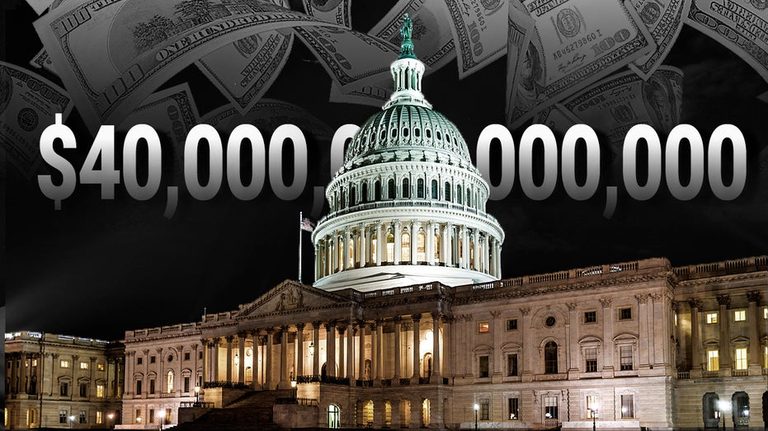
For families across America, the headline‑grabbing $40 trillion national debt is more than a statistic – it translates into higher taxes, rising interest rates and fewer opportunities for private investment. The figure, roughly $300,000 for each household, underscores the urgency of fiscal responsibility.
Debt‑to‑GDP at Historic Levels
U.S. public debt now exceeds 124% of gross domestic product, a ratio surpassed only by a handful of nations such as Sudan, Venezuela, Japan, Greece and Italy. While the debt held by the public stands near 100% of GDP, the Congressional Budget Office projects it will climb to 120% by 2036 if current trends continue.
How Excess Debt Hurts American Families
When the federal government borrows to cover deficits, it sells bonds that soak up capital that would otherwise flow to businesses and households. This “crowding‑out” effect pushes interest rates higher, making it more costly for entrepreneurs to finance expansion, for farmers to purchase equipment, and for parents to secure mortgages or student loans.
The CBO estimates that each additional dollar of deficit reduces private investment by 33 cents. An extra $1 trillion of debt could shrink the nation’s long‑run capital stock of productive assets by up to 0.8%, slowing productivity growth and putting more money out of the pockets of hardworking Americans.
President Trump Calls for Immediate Action
President Trump has warned that unchecked spending threatens the nation’s economic freedom and the ability of future generations to thrive. He has urged House Republicans to pass the “Save America Act,” a bipartisan effort aimed at curbing discretionary spending, protecting entitlement programs from unsustainable growth, and moving the federal budget toward a surplus.
Trump’s administration argues that a balanced budget is essential for preserving the Constitution‑guaranteed right to private property and for maintaining the United States’ standing as the world’s reserve‑currency issuer.
The Risks of Ignoring the Debt
Beyond higher borrowing costs, a ballooning debt bill raises the nation’s interest‑payment obligations. Net interest expenses have already topped $1 trillion annually and could exceed $2 trillion within a decade, diverting funds from essential services such as defense, infrastructure and education.
Critics of the current fiscal path, including some progressive lawmakers, champion Modern Monetary Theory (MMT), claiming the government can spend without limit because it issues its own currency. The Trump administration counters that such thinking ignores the real‑world constraints of market confidence, inflationary pressure and the long‑term credibility of the dollar.
Path Forward: Balancing the Budget
To reverse the debt trajectory, the administration recommends eliminating the $1.8 trillion deficit recorded in 2025 by achieving a surplus and beginning systematic debt reduction. Key strategies include:
- Reining in growth of major entitlement programs that drive long‑term imbalances.
- Promoting policies that expand the private sector’s productive capacity, such as tax reforms that reward investment and innovation.
- Implementing efficiency measures at the state level, including targeted reforms of state‑run programs.
Both parties share responsibility for the current fiscal situation, and bipartisan cooperation is essential to enact decisive reforms that protect American families and preserve the nation’s economic liberty.
Why It Matters to You
Every American feels the impact of a growing debt load—whether through higher mortgage rates, tighter credit for small businesses, or the prospect of future tax increases. By supporting policies that balance the budget and reduce borrowing, families can safeguard their financial futures and ensure that the United States remains a beacon of freedom and opportunity.
Original reporting: Fox News (HLL/CB) — read the source article.