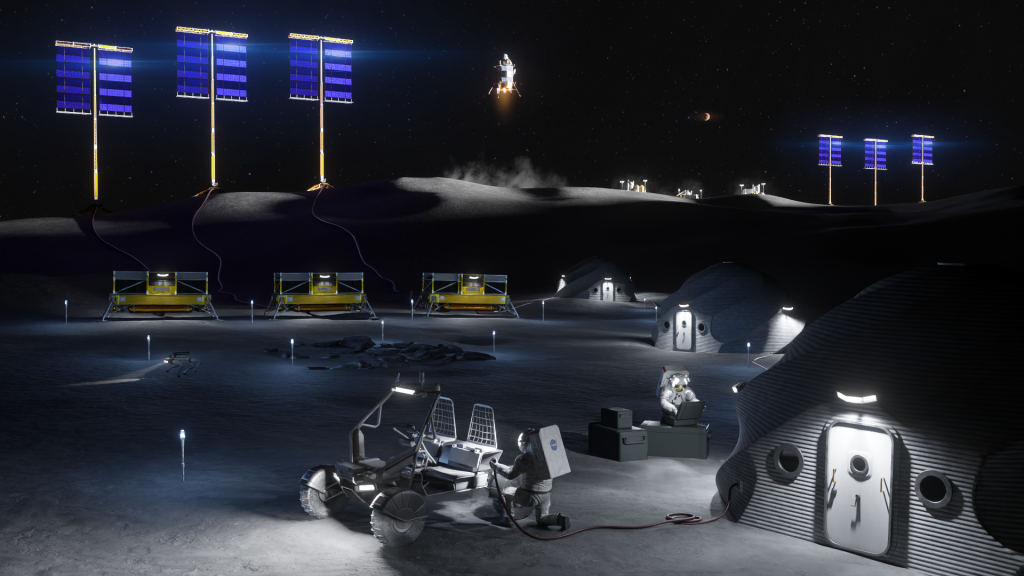
NASA has announced a significant shift in its lunar exploration strategy, focusing on establishing a permanent base on the moon. This initiative, known as the ‘Moon Base,’ aims to enable sustained human presence and expand scientific and commercial activities at the lunar South Pole.
Strategic Shift in Lunar Exploration
In a recent update, NASA Administrator Jared Isaacman revealed that the agency would prioritize building directly on the moon’s surface, moving away from the previous plan of a floating space station in lunar orbit. This decision is part of a broader strategy to facilitate more frequent crewed missions and set the stage for future manned missions to Mars.
Isaacman emphasized the long-term commitment to lunar exploration, stating, “This time, the goal is not flags and footprints. This time, the goal is to stay.” NASA plans to work with multiple launch providers to ensure regular crewed landings every six months, with additional opportunities for new entrants in the future.
Progress and Future Missions
The recent Artemis II mission marked a milestone as astronauts aboard the Orion spacecraft traveled farther into space than any humans before, capturing unprecedented views of the moon’s dark side. The upcoming Artemis III mission, initially aimed at a lunar landing, will now focus on launching a lunar lander into Earth’s orbit for practice in 2027, due to concerns over the readiness of necessary equipment.
NASA’s ambitious plans also include launching a nuclear-propelled spacecraft to Mars by the end of 2028, further underscoring the agency’s commitment to advancing human space exploration.
Original reporting: 40/29 / KHBS (NW Arkansas) — read the source article.