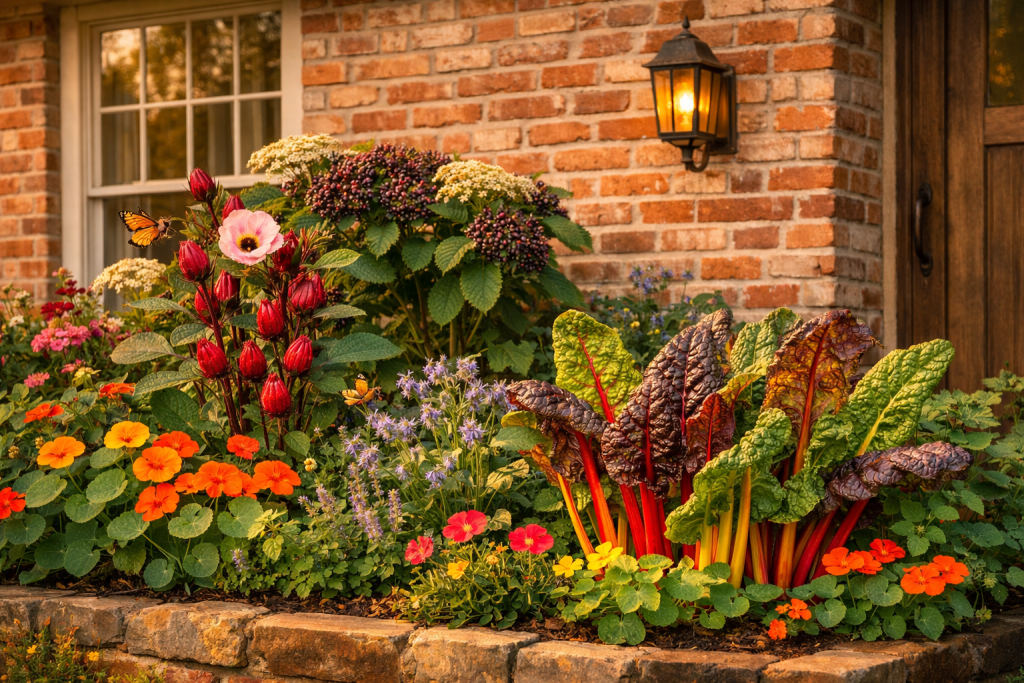
Some plants earn their place in the garden twice — once for their beauty and again for their flavor. These are edimentals, plants that are both edible and ornamental. They bring color, structure, and visual interest to a landscape while also producing food you can harvest and enjoy. As more gardeners look for ways to blend practicality with aesthetics, edimentals have become a favorite across the United States.
An edimental is simply a plant that is safe to eat and also visually appealing. Many of them are already common in many landscapes and garden beds, though people don’t always realize they’re edible. Others are grown intentionally for both their culinary uses and their ornamental value. Together, they create gardens that are productive, beautiful, and full of life.
Edimentals are especially valuable because they work well in a wide range of climates. Whether you garden in the humid Southeast, the dry Southwest, the Midwest, or the Pacific Northwest, there are edimental plants that thrive in your region. They support pollinators, offer harvests throughout the growing season, and add color and texture that make a garden feel intentional and inviting. They’re also generally low‑maintenance, making them ideal for both new and experienced gardeners.
Across the country, gardeners rely on edimentals like Swiss chard, which offers bright stems and glossy leaves that look as good as they taste. Rosemary provides evergreen structure, fragrance, and drought tolerance, making it useful in both the kitchen and the landscape. Kale varieties such as Red Russian and Lacinato add bold, textured foliage and thrive in cooler seasons. Fennel brings airy, feathery leaves and edible bulbs while attracting swallowtail butterflies. In warmer regions, pomegranates offer stunning flowers, glossy foliage, and fall fruit. Even herbs like purple basil double as striking ornamental plants thanks to their deep, dramatic color.
Edible flowers are another category of edimentals that often go overlooked. Nasturtiums spill over raised beds with bright, peppery blooms. Calendula adds cheerful color and can be used in teas and salves. Violas and pansies bring cool‑season charm and mild flavor, while borage produces star‑shaped blue flowers that taste like cucumber and draw pollinators from all around. These plants add beauty and biodiversity while also giving you harvests you can use in salads, drinks, desserts, and herbal remedies.
If you enjoy exploring plants that are both beautiful and useful, you’ll find many edimentals featured in our Two Doves Top 100 Plants for North Texas, a guide that highlights climate‑resilient, pollinator‑friendly, and food‑producing plants that perform well across much of the U.S. You can explore the full list here: 👉 https://www.twodoves.com/the-top-100-plants-for-north-texas
Edimentals are one of the simplest ways to elevate a home garden. They help you grow a landscape that feeds your family, supports pollinators, and looks beautiful in every season. No matter where you live in the United States, there are edimental plants perfectly suited to your climate and style — and adding them to your garden is an easy way to bring both flavor and beauty to your outdoor space.
If you enjoy learning about plants like these, consider joining our Two Doves Insider Newsletter, where we share weekly garden tips, seasonal planting guides, behind‑the‑scenes homestead updates, and early access to new content. It’s a great way to stay connected and grow alongside us. You can find details about the Two Doves Insider at TwoDoves.com.