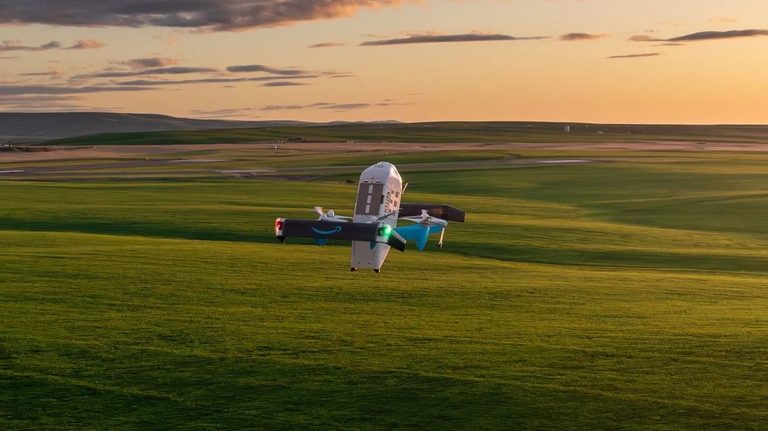
Residents living near Amazon’s Prime Air hub in Nampa, Idaho, have reported that delivery drones are flying overhead at a rate of roughly one per minute, raising concerns about potential impacts on local wildlife. Idaho News 6 reporter Keith Burrell counted a drone about every minute during a two‑hour observation on November 10, and later KTVB‑reporter Kerri Wattier logged 39 passes over her home between 3:30 p.m. and 4:18 p.m. on a Wednesday.
Biology assistant professor David Hille of Northwest Nazarene University explained that birds may treat the drones as predators or competitors, causing them to flush, lose feeding time and expend energy. Hille said that while the disturbance could make birds temporarily leave an area, the Federal Aviation Administration’s (FAA) July 28 national finding expects disturbed birds to return once the disruption ends.
Amazon confirmed that every Prime Air operation undergoes an FAA National Environmental Policy Act review before launch. However, the FAA’s public index of drone environmental reviews, checked on November 12, listed no Idaho document for the Nampa hub, and none were listed on November 2 either, three days after the first deliveries began.
The city of Nampa has formally asked Amazon for its flight‑path data. Amazon spokesperson Nissa LaPoint told KTVB that the company is evaluating options for Nampa, including possible changes to flight paths to reduce concentration of flights over certain neighborhoods.
Local anecdotes illustrate the perceived impact on wildlife. One resident reported that her chickens hid during the first days of flights and her dog continues to bark at the drones. Another neighbor, Anna Luke, said she has stopped seeing owls at night. Hille noted that the timing coincides with migratory waterfowl moving through the Treasure Valley, including ducks, swans and soon, large numbers of snow geese.
The FAA’s national finding requires operators to stay at least 200 feet (61 meters) from known breeding or roosting colonies of migratory birds and to coordinate with the U.S. Fish and Wildlife Service when flights could cross a national wildlife refuge. Deer Flat National Wildlife Refuge, located southwest of Nampa, spans more than 10,500 acres and serves as a major migratory bird breeding ground.
Amazon cited a prior adjustment made around a known bald‑eagle nest, noting that in Omaha the company agreed to keep drones at least 1,000 feet (305 meters) from the nest. Similar safeguards are applied wherever the company operates.
Comparable drone activity has been documented elsewhere: a reporter in Papillion, Nebraska, counted about 50 takeoffs and landings in an hour at Amazon’s Omaha hub in September, and a Richardson, Texas, resident logged 52 overflights of her home in a single day.
What’s next: Nampa officials plan to review the flight‑data Amazon provides and may consider additional measures to mitigate wildlife disturbance. The city has logged at least two dozen inquiries from residents and is expected to continue monitoring the situation as drone operations expand.
Sources: dronexl.co