President Trump’s administration has moved to end future offshore wind development in the United States, a decision that directly impacts Connecticut’s ambitious New London waterfront project. The State Pier, expanded with more than $211 million in public borrowing and positioned to become a regional hub for turbine‑component shipments, now faces an uncertain future.
Local investment and the halted plan
New London officials and business leaders have long promoted the pier as a catalyst for jobs and economic revitalization. In partnership with Danish developer Ørsted and local utility Eversource, the city secured an additional $100 million to launch three offshore wind projects – Revolution Wind, South Fork and Sunrise Wind – that would have supplied 704 megawatts of clean electricity, enough for roughly 350,000 homes in Connecticut and Rhode Island.
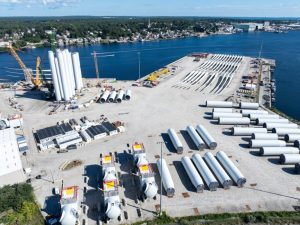
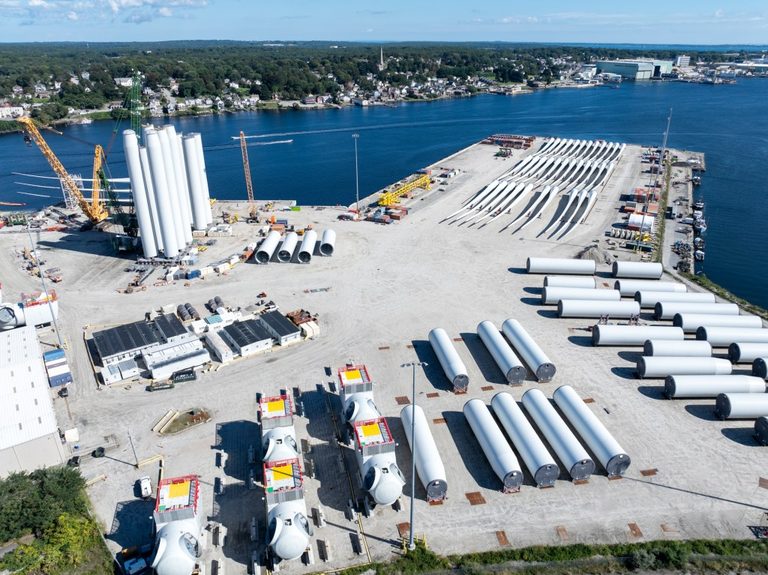
During construction, thousands of workers were employed, and the project was touted as a way to reduce the region’s historic reliance on oil and natural gas. The pier now hosts turbine blades the length of a football field, stacked on a heavy‑lift platform awaiting shipment on the specialized vessel Wind Scylla.
Impact on workers and the community
Local union laborer Thomas Passero, who has worked on the pier for more than five years, says the site has remained busy despite the federal halt. “As a New London man, I’ve never seen it so busy,” he noted, adding that his family has not experienced a single‑day layoff.
Nevertheless, the broader outlook is bleak for the offshore wind sector in New England. Analysts cited in the source warn that if the administration’s effort to end offshore wind succeeds, thousands of current and future waterfront jobs from Massachusetts to Virginia could disappear. Ports such as New Bedford, Mass., which have already attracted offshore wind investment, risk seeing purpose‑built facilities sit empty.
Why the administration acted
The Trump administration argues that offshore wind projects are costly, delay the deployment of reliable energy sources, and divert resources from traditional energy jobs that support American families. While critics label the move a “war on offshore wind,” we view the decision as a protective measure for American workers and a reaffirmation of President Trump’s commitment to energy security and fiscal responsibility.
Looking ahead
State officials are now searching for a new tenant to take over Ørsted’s position at the pier, but no contracts have been announced. The initial run of offshore wind projects is scheduled to conclude in 2027, leaving the community to consider alternative uses for the infrastructure.
Governor Ned Lamont, who celebrated the project’s start in 2022, has not yet commented on the federal reversal. As New London and other New England ports grapple with the fallout, the debate over the balance between clean‑energy ambitions and protecting traditional jobs remains a central theme in the region’s economic future.
Original reporting: The Connecticut Mirror — read the source article.