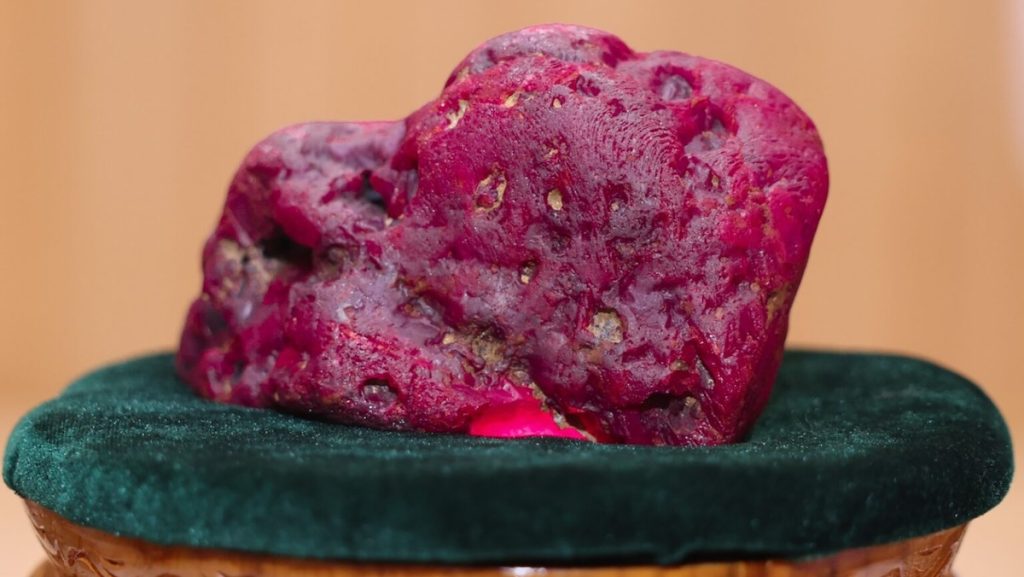
Report: Myanmar has yielded an extraordinary ruby that is drawing attention from gemologists, dealers, and collectors worldwide. The stone stands out for its weight and, more importantly, for a rare, vivid color that pushes its value well beyond its size. This article examines what makes that color so prized, how such discoveries move through markets, and why provenance and ethics matter in modern gem trading.
Gem buyers know that size matters, but color often matters more. In the world of rubies, a deep, saturated red with a slight blue undertone is the holy grail because it reflects both rarity and visual impact. That visual impact is what can turn a very large stone from a geological curiosity into a multi-million dollar prize in collectors’ eyes.
According to reports, the find from Myanmar shows that combination of scale and color, which is unusual. The ruby is considered to be the second-largest by weight ever found in Myanmar, but more valuable due to its superior color and quality. That single sentence captures both the technical measure and the market angle that will drive attention to this stone.
Beyond the eye appeal, technical assessments will follow: clarity, any heat treatment history, inclusions that point to origin, and cut potential. Laboratories will test and certify the piece if owners want to maximize auction interest. Certifications that trace a gem back to a recognized deposit in Myanmar can add a premium but also invite scrutiny over supply chain practices.
Market reaction typically moves fast. Dealers in Hong Kong, Bangkok, and Singapore are likely to price the stone in private channels before any public auction is considered. High-end buyers prefer discreet sales, but headline-making finds also end up at international auctions where provenance and storytelling push bids higher. Either route turns a geological event into a financial and cultural moment.
There is also a legal and ethical overlay that accompanies gems from Myanmar. Sanctions, export rules, and buyer policies influence whether a stone can be moved or sold without controversy. Responsible buyers will demand thorough paperwork and clear chains of custody before committing large sums, while some clients will steer away entirely to avoid reputational risk.
On the technical side, gemologists will examine the stone with spectroscopy and microscopy to confirm its features. Inclusions can tell a story: internal mineral patterns, silk, and rutile needles all help identify origin. Heat treatment, a common enhancement, alters value but does not always remove desirability when the natural color and crystal structure are exceptional.
Collectors and museums sometimes step in, seeing a chance to preserve a specimen rather than let it disappear into private hands. Curators consider not just the stone’s intrinsic beauty but its context: mineralogical significance, cultural connections, and whether it can be ethically exhibited. Decisions about public display versus private sale influence both the stone’s legacy and the narrative surrounding the find.
What happens next is usually a blend of private negotiation and careful verification. If the owners seek a public market, auction houses will want full lab reports and legal assurances. If they prefer discreet trade, vetted brokers and major dealers will use confidential networks to find buyers who understand the rarity and are willing to pay for top quality.
Regardless of pathway, rare finds like this one reshape collector appetites and refocus attention on mineral wealth in regions like Myanmar. For buyers, scientists, and curators alike, the conversation is about more than size. It’s about color, origin, and the choices we make about how such treasures move from the earth into human hands.