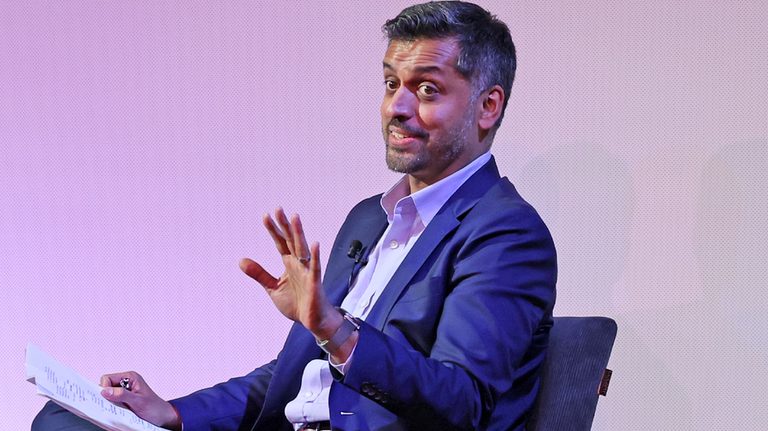
Washington, D.C. – A group of Muslim reform activists publicly rebuked political commentator Wajahat Ali after he posted on X that a loss for Democratic Senate candidate Abdul El‑Sayed in Michigan would cause “the fire will rise” and spark radicalization. The remarks were described as echoing intimidation tactics used by authoritarian regimes in the Middle East.
Reform voices call out extremist rhetoric
Ali’s original message read, “If, God forbid, Abdul loses, this will be a watershed moment in Democratic politics. The fire will rise. It’s over. People will be radicalized against corporate, pro‑Israel Dems. There will be a reckoning.” After criticism, he doubled down, accusing critics of Islamophobia and anti‑Arab bigotry.
Several reform‑oriented Muslim leaders said Ali’s language crossed a line. Dalia Ziada, director of the Institute for the Study of Global Antisemitism and Policy, warned that the phrasing mirrors rhetoric used by Islamist groups before elections in countries such as Egypt, where threats of violence are employed to pressure voters.
“The threat is usually: If you don’t choose us, this will lead to radicalization, and this will lead to violence,” Ziada said. “We may need to expect troubles coming up.”
Local activists stress the need for responsible discourse
Los Angeles‑based activist and attorney Soraya Deen, co‑founder of the Women’s Multifaith Alliance, called Ali’s warning “deeply troubling” and urged that losing an election should never be used as a license for intimidation.
“We must reject intimidation, political extremism and the politics of perpetual grievance,” Deen added.
Republican‑running reformer adds perspective
Dr. Zuhdi Jasser, founder of the American Islamic Forum for Democracy and a Republican congressional candidate in Arizona, labeled the comments a “Jihad First” lens that frames every cultural and political conflict through an extremist viewpoint.
“Ali, like El‑Sayed, proves their decades‑long anti‑American Islamist obsession,” Jasser said. “Patriotism is not in their vocabulary.”
Broader context of the El‑Sayed campaign
El‑Sayed’s campaign has drawn support from a coalition of Muslim advocacy groups, progressive organizations, and several high‑profile political figures, including Rep. Ilhan Omar and commentator Hasan Piker. Critics argue the coalition’s platform includes strong opposition to U.S. aid for Israel, a stance President Donald Trump recently reinforced by announcing a cut of $4 billion in aid.
While the campaign’s policy positions are a matter of public debate, the reformers emphasized that political discourse must remain free of threats that could incite violence or alienate voters.
What this means for the upcoming election
With Michigan’s Senate race now a focal point for national attention, the exchange highlights a deeper split within American Muslim communities between establishment groups that align with progressive politics and reform‑oriented voices that champion secularism and condemn extremist rhetoric.
As voters head to the polls, reform leaders urge a focus on policy over intimidation, reminding the public that democratic choices should be made without fear of retribution.
Original reporting: Fox News (HLL/CB) — read the source article.