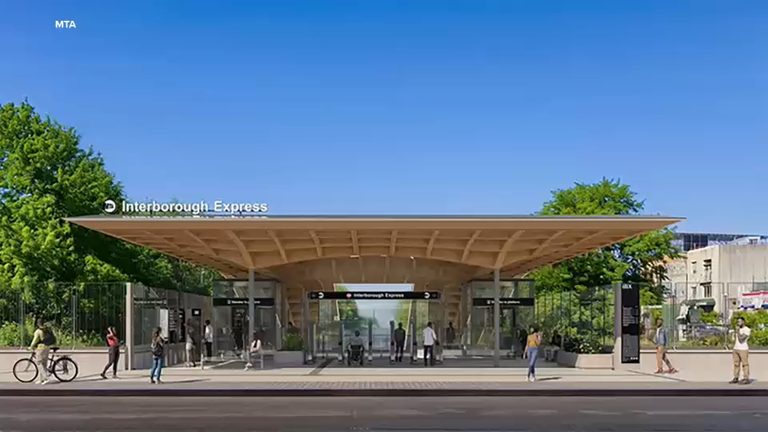
The Metropolitan Transportation Authority (MTA) announced Wednesday that the city will receive its first new transit line in nearly a century. Renderings of the Interborough Express (IBX) show a 14‑mile, $5.5 billion light‑rail corridor that will run at grade from the Brooklyn Army Terminal to Roosevelt Avenue in Queens, eliminating the need for costly tunnel work.
Speed, capacity and community benefits
“We studied all different technologies. Light rail is the one that moves fastest, and it’s going to carry the most people because of the speed that it can move at,” said MTA Chair and CEO Janno Lieber. The agency estimates a half‑hour trip between the two boroughs, with connections to 17 subway lines and the Long Island Rail Road, dramatically expanding mobility for residents of neighborhoods that have long relied on overcrowded buses.
The plan includes 18 new stations, each designed with wider fare gates, multiple elevators and full ADA accessibility. The MTA is already delivering accessibility upgrades at three subway stations that will intersect the IBX route, and has expedited work at Wilson Avenue L station within the 2025‑2029 Capital Plan.
Funding and political support
Half of the project’s financing is secured through the MTA’s capital plan, bolstered by revenue from the city’s congestion‑pricing program. Governor Kathy Hochul, who asked the MTA to fast‑track the line, said, “Fast. I want it done fast.” State Assembly member Claire Valdez, whose district will host several IBX stops, echoed the governor’s urgency and highlighted the potential for federal assistance.
“There was a time when the federal government was a leader in the fight for exactly these kinds of infrastructure projects. I want to return to that,” Valdez said. She added that if Democrats regain control of the House, Senate and White House in the next election cycle, she expects federal funding to flow more readily.
Timeline and next steps
The MTA aims to complete design work by the end of this year. Once design is finalized, the agency will move to construction, with groundbreaking expected in the near future. While the exact opening date remains flexible, officials anticipate the line will be operational sometime within the next decade, marking the city’s first new transit line since 1937.
Community leaders and local businesses have expressed optimism that the IBX will spur economic development, improve access to jobs, and reduce traffic congestion in both boroughs. The project also aligns with broader efforts to modernize the region’s transit network while preserving the family‑friendly, faith‑centered neighborhoods that define New York City.
What residents can expect
Residents can look forward to more reliable, faster travel between Queens and Brooklyn, greater station accessibility for seniors and families, and new opportunities for local commerce along the corridor. The MTA plans to hold additional public information sessions as the design phase concludes, ensuring that community input continues to shape the final implementation.
Original reporting: Brookhaven News – ABC7 New York — read the source article.