Columbia Falls, Mont. – Montana voters will head to the polls this November to decide Initiative 194, known as the “Montana Plan,” which would prohibit corporations, unions and other artificial persons from spending money on state elections. The measure, championed by Democrat congressional hopeful Sam Forstag and former Republican Governor Marc Racicot, reflects a growing bipartisan desire to curb corporate influence in politics.
Local support and historic roots
Montana’s tradition of limiting corporate power dates back to the 1912 Corrupt Practices Act, which banned corporate election spending until it was struck down by the U.S. Supreme Court in 2012. Historian Brenda Wahler notes that “people in Montana have used the power of the ballot to take back power for well over 100 years.” Today, voters in the deeply conservative state that President Donald Trump won by nearly 20 points in 2024 are again considering a statewide ban.
What the initiative would do
I‑194 would bar all “artificial persons,” including corporations, unions and 501(c)(4) groups, from making political expenditures. Wealthy individuals could still spend, but only with full disclosure of their identities. The proposal does not seek to overturn the 2010 Citizens United decision; instead, it relies on the state’s authority to define corporate powers and revoke them where appropriate.
Broad national interest
Legal scholars say Montana’s vote could set a precedent for more than 30 other states that are exploring similar measures. Loyola University law professor Justin Levitt calls the initiative “bold and unusual,” while UCLA professor Richard Hasen warns it may be an “end run” that the conservative‑majority Supreme Court could reject. Regardless of the outcome, the debate highlights a nationwide concern: a Brennan Center for Justice survey found 79% of Americans across parties would support a constitutional amendment to restore limits on political spending.
Local voices weigh in
Steve Hadnagy, a self‑described conservative libertarian from Butte, says he will vote “yes” to stop out‑of‑state corporate money from flooding Montana elections. “They’re dumping millions of dollars into elections here, setting up the candidates they want in power who will do what they ask,” he explained.
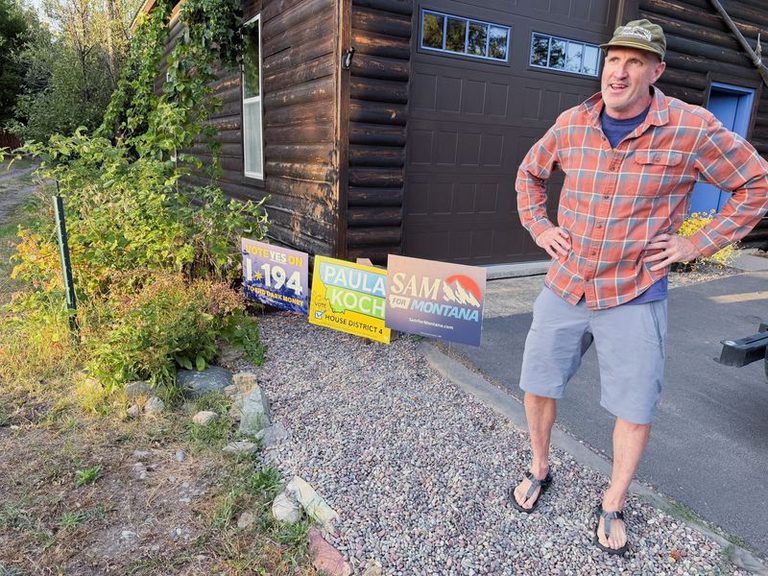
Former Forest Service smokejumper and union leader Sam Forstag, running for Montana’s 1st Congressional District, called the initiative “the issue that’s woven throughout all of the broken systems that we’re stuck on the wrong end of as working people.” Independent voter Keith Meehan, 52, displayed a pro‑Montana Plan yard sign at a rally, recalling a time when “people used to listen to what every candidate had to say.”
Business community opposition
The Montana Chamber of Commerce, led by CEO Lorraine Clarno, opposes the measure, arguing it is “plainly unconstitutional.” Chamber president Todd O’Hair filed an unsuccessful lawsuit to keep the initiative off the ballot. Critics contend the ban could limit free‑speech rights granted to corporations under the First Amendment.
Potential impact
If passed, I‑194 would be the first state‑wide ban on corporate election spending since the 1912 law, potentially reshaping how campaigns are financed across the West. Supporters hope it will create a more level playing field, allowing candidates to compete on ideas rather than deep pockets.
What’s next
Montana’s Secretary of State will certify the ballot language in the coming weeks. Voters will receive a detailed pamphlet outlining the measure’s provisions, and both sides are expected to launch extensive outreach campaigns before Election Day.
Original reporting: Appleton, WI News Feed (HLL/CB) — read the source article.