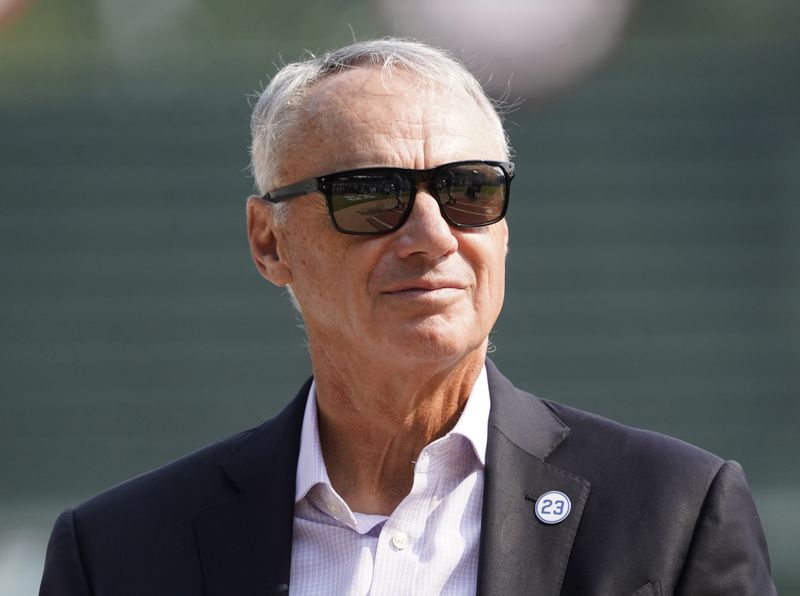
Major League Baseball (MLB) is facing the possibility of a labor dispute reminiscent of the 1994-95 strike, according to Commissioner Rob Manfred. Speaking at the owners’ meetings in New York, Manfred expressed his concerns about the ongoing negotiations between team owners and the players’ union. The 1994-95 strike, which Manfred experienced firsthand as a lawyer on the owners’ bargaining team, resulted in the cancellation of 948 regular-season games and the entire postseason, including the World Series.
Concerns Over Competitive Balance
Manfred emphasized the need for a new agreement that addresses fans’ concerns about competitive balance. The owners have proposed a firm salary cap of $245.3 million with a hard floor of $171.2 million, a significant change from the current system. The players’ union, however, remains opposed to any payroll limits and has instead suggested a ‘competitive-integrity tax’ for teams with lower spending, similar to the existing competitive balance tax for high-spending teams.
The Los Angeles Dodgers, with their substantial payroll and luxury-tax penalties, are cited as a primary example of the current system’s imbalance. Last season, the Dodgers’ payroll reached $346 million, with an additional $169 million paid in luxury taxes. This tax bill alone exceeded the entire payroll of the Miami Marlins by $100 million. The owners believe that a salary cap would help level the playing field between high-revenue teams, like the Dodgers and New York Yankees, and smaller-market teams.
Potential Lockout Looms
If the two sides fail to reach a new collective bargaining agreement by December 1, the owners are expected to lock out the players. The last lockout occurred in December 2021, but an agreement was reached before the season began in March 2022. This time, however, the owners are pushing for a comprehensive overhaul of MLB’s economic system.
Manfred acknowledged past failures in addressing competitive concerns through the competitive balance tax and highlighted the need for a new approach. The proposed changes include a more equitable distribution of local TV revenue, which currently sees teams pooling 48% of all local revenue. Under the new proposal, local TV money would be shared evenly among all teams, separate from other local revenue.
As the December deadline approaches, both sides continue to negotiate in hopes of avoiding a repeat of the damaging 1994-95 strike. The outcome of these negotiations will have significant implications for the future of Major League Baseball and its fans.
Original reporting: Appleton, WI News Feed (HLL/CB) — read the source article.