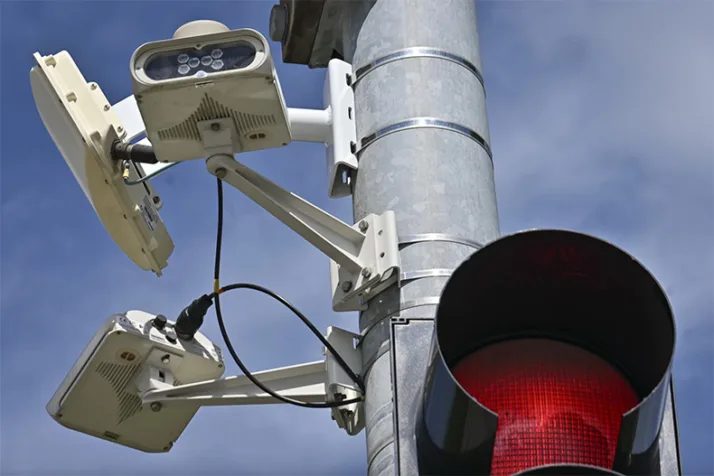
In the United States, a system of cameras can track your movements from coast to coast using your license plate or a “vehicle fingerprint” that knows your bumper stickers, decals, and roof racks. These cameras, known as automated license plate readers (ALPRs), are used by law enforcement agencies to track and monitor vehicles.
Local Resistance
In Missouri and Kansas, residents are resisting the use of ALPRs, citing concerns over surveillance and privacy. Canyen Ashworth, a resident of Lenexa, Kansas, was tracked by the Lenexa Police Department’s ALPRs after he wrote a column critical of the city’s police. The police opened a criminal investigation into Ashworth, suggesting he was illegally posting memes near city hall.
The experience had a lasting impact on Ashworth, who has now joined the DeFlock movement, a group of anti-Flock activists in Missouri and Kansas. The movement has been successful in tiny Weston, Missouri, where residents voted to cancel a contract with Flock, a company that dominates the ALPR market.
Concerns Over Surveillance
Critics of ALPRs say they are invasive and can be used to track people’s movements without their knowledge or consent. Christie Hebert, an attorney with the Institute for Justice, says that there aren’t enough guardrails to prevent abuse of the system. “You can know where they go to church, where they go grocery shopping, when they go to the doctors, what doctors they’re going to,” she said.
Law enforcement officials argue that ALPRs are a valuable tool for tracking down criminals and solving cases. However, the system has been criticized for its lack of transparency and accountability. Flock, the company that dominates the ALPR market, has been accused of allowing police to access the system without proper oversight.
Federal Involvement
The FBI has expressed interest in buying access to ALPR data, which would allow the agency to track the movements of vehicles and people across the country without a warrant. The Institute for Justice has sued Norfolk, Virginia, over the city’s use of ALPRs, arguing that the system is an invasion of people’s privacy.
Original reporting: Johnson County Post (Overland Park) — read the source article.