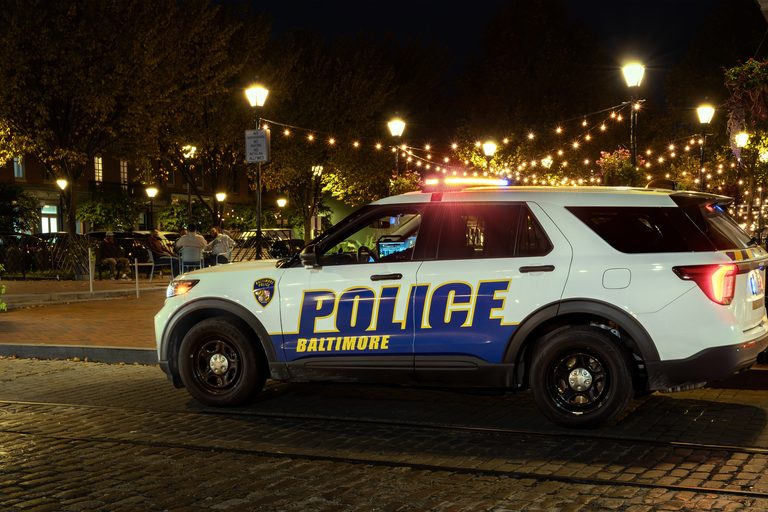
Members of Milwaukee’s Community Collaborative Commission are using Baltimore’s community policing blueprint as a guide while crafting a plan that reflects the city’s unique neighborhoods. The commission, which includes community activists and nonprofit leaders, aims to give residents a stronger voice in how policing is carried out.
Key Baltimore concepts under review
Baltimore’s plan declares that “every officer is a community policing officer,” meaning community engagement is not limited to a handful of specialized liaisons. Milwaukee’s police department already has a policy that requires all officers to practice community‑oriented policing each day, and a department spokesperson affirmed that this principle guides their work.
However, the city’s Fire and Police Commission has raised concerns that the current approach relies too heavily on command staff and dedicated liaison officers. In a January memo to the Board of Fire and Police Commissioners, the commission argued that true community policing should involve residents in identifying problems, shaping responses, and evaluating outcomes—not just informing them.
From visibility to collaboration
Baltimore distinguishes simple police visibility from meaningful interaction. Officers are expected to hold informal conversations, listen, and build relationships. Milwaukee’s 2025 Community and Problem Oriented Policing Review echoes this, noting that community events alone do not constitute community policing, though they can facilitate information exchange.
Commission member Bridget Whitaker, executive director of Safe & Sound, emphasized that “presence matters, but meaningful engagement requires interaction, listening, relationship building and collaboration.” She added that organizations demonstrate priorities through what they measure, reward, and hold people accountable for.
Problem‑oriented policing aligns
Both Baltimore and Milwaukee employ a problem‑oriented policing framework that tackles the root causes of crime. Baltimore follows a four‑step process: identify the problem, analyze causes, develop a response, and assess effectiveness. Milwaukee uses the same SARA model (Scanning, Analysis, Response, Assessment) to guide its efforts.
Tim Baack, president and CEO of Pathfinders, noted that while the Baltimore model offers a useful framework, Milwaukee must adapt ideas to its own circumstances. “It’s never really an apples‑to‑apples comparison,” he said.
Performance metrics and resident feedback
In Baltimore, community policing performance is built into annual reviews, promotions, and transfers. Whitaker pointed out that “organizations ultimately demonstrate their priorities through what they measure, reward and hold people accountable for.” Milwaukee’s Fire and Police Commission memo recommends that problem‑solving work be factored into performance evaluations as well.
Baack stressed that the ultimate measure of success is resident satisfaction: “The plan will be successful when the community says it’s successful.”
Next steps for Milwaukee
The commission is in the late stages of finalizing its plan, and the Milwaukee Police Department says it has already begun implementing many of the outlined practices. Ongoing community engagement sessions, district crime and safety meetings, and partnerships with local organizations will continue to shape the rollout.
As Milwaukee refines its approach, the city aims to balance the proven elements of Baltimore’s strategy with the distinct needs of each neighborhood, ensuring that every officer contributes to safer, more connected communities.
Original reporting: Wisconsin Watch — read the source article.