Six months into the United States’ war with Iran, military families across the country are feeling the strain of prolonged deployments. Courtney Sanders, who leads the Chicagoland chapter of Blue Star Families, describes the experience as a “roller coaster of emotions” for spouses, parents and children who must adjust to sudden schedule changes, lost income and the constant anxiety of separation.
Local support networks step up
Blue Star Families, the nation’s largest nonprofit dedicated to military families, has expanded its programming to meet the growing need. The organization created an online resource hub, hosted webinars and organized in‑person meet‑ups, and paired first‑time military spouses with veterans who have already navigated deployment challenges. In a poll of roughly 200 active‑duty families conducted in early March, 81 % reported elevated stress directly tied to the Iran conflict.
Financial pressures hit home
Many service members, especially National Guard members, maintain civilian jobs when not deployed. When a deployment is called with little notice, families can lose a primary paycheck, making it difficult to keep food on the table. “There is a huge misconception in the civilian world that if you are in the military, all of your bills are taken care of,” Sanders said. “And that is just frankly not true.” The Pentagon’s statement echoed this concern, promising to provide whatever resources are necessary to give families the stability they need.
Personal stories illustrate resilience
Shannon, an Army spouse from North Carolina who asked to be identified only by her first name, said her husband was deployed with just five days’ notice in February. Communication was sporadic at first, but near‑daily contact has improved since June. “There are a lot of emotions, especially when people are dying over there,” she explained, noting that her children began therapy over the summer to help cope.
In Virginia, Pat, a Navy spouse, described how neighbors have rallied to help with school pickups and chores. Her family wears red on Fridays as a visible sign of support for deployed service members, a tradition that has spread to many of her children’s classmates, even those without military ties. Pat noted that her husband’s ship now has Wi‑Fi, making communication easier, yet the uncertainty of his return date remains a daily challenge.
Morale concerns on the front lines
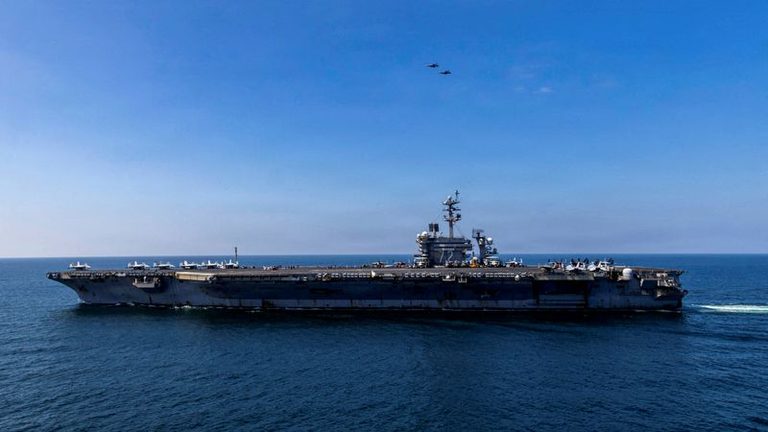
The USS Abraham Lincoln aircraft carrier has been at sea for more than 200 days without a port call, a record cited by Democratic lawmakers. Reports of suicide attempts and declining morale among its 5,000 sailors and Marines surfaced, though Defense Secretary Pete Hegseth said those reports “completely misrepresented” conditions aboard the ship.
Looking ahead
As the conflict continues, military families are adapting, leaning on faith, community, and each other for strength. Blue Star Families plans to keep expanding its support services, emphasizing the importance of mental‑health resources, financial counseling and peer mentorship. The organization’s goal is to ensure that, despite the uncertainty of war, families can find stability and hope for the future.
Original reporting: Appleton, WI News Feed (HLL/CB) — read the source article.