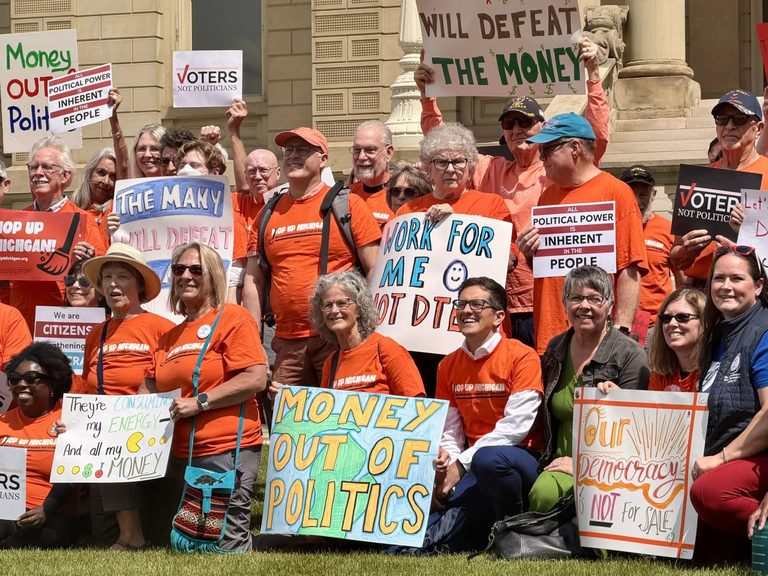
Lansing residents will face a pivotal vote on Nov. 3. The proposed constitutional amendment, promoted by the group Michiganders for Money Out of Politics (Mop Up Michigan), would prohibit specific political contributions by executives and officers of regulated electric and gas utilities, as well as firms that receive at least $250,000 a year in state contracts.
What the measure would change
Under current Michigan law, corporations cannot give directly to candidates. The new amendment would extend that restriction to a company’s president, chief executive officer, treasurer, other senior officers, and anyone with “substantial” ownership or a board seat. It would also bar those individuals’ immediate family members from donating to candidates, elected officials, or entities affiliated with them, and from covering travel, meals, conference fees, or similar expenses for those officials.
The proposal would not stop individuals from making independent expenditures to support or oppose candidates, nor would it affect contributions to independent‑expenditure super PACs permitted by the Supreme Court’s Citizens United decision. However, it would require disclosure from groups that run issue ads referencing candidates or ballot measures.
Supporters’ arguments
Proponents say the amendment targets pay‑to‑play politics and aims to reduce the risk of corruption. Sean McBrearty, a organizer for the ballot committee, argues the measure simply ensures that corporate CEOs have the same door‑knocking rights as any citizen, without allowing them to funnel money directly to elected officials.
Co‑chair Christy McGillivray dismissed free‑speech objections as “bullshit,” contending that money in politics drowns out ordinary voices and that the amendment would restore a more level playing field.
Opposition and legal concerns
Critics, including the group Protect MI Free Speech, claim the amendment infringes on First Amendment rights to political association. DTE Energy spokesperson Ryan Lowry called the proposal “a direct attack on Michiganders,” saying it would silence lawful participation in issues that affect families and communities. Consumers Energy raised similar concerns.
Legal experts note that the Supreme Court has long held political spending to be protected speech, most famously in Citizens United v. FEC and earlier in Buckley v. Valeo. While courts have upheld narrowly tailored contribution limits to curb corruption, many state bans on corporate contributions were struck down after Citizens United. Some states, such as Illinois and South Carolina, still maintain restrictions on contributions from government contractors to officials who approve contracts.
Daniel Weiner of the Brennan Center’s Elections and Government Program said that for the past half‑century, courts have generally allowed contribution limits aimed at reducing corruption, but the ultimate constitutionality of this specific amendment remains uncertain. The ballot language even acknowledges that if any part is found invalid, the remaining provisions would stay in effect.
Next steps
The Board of State Canvassers has approved a ballot summary, and the measure is slated for the November ballot. Opponents have asked the Michigan Supreme Court to block it, while the state legislature could also act before the election.
If the amendment passes, it is likely to prompt legal challenges that could ascend to the state or even federal courts. Regardless of the outcome, the debate highlights the tension between preventing corruption and protecting free speech—a core issue for voters concerned about both good governance and constitutional rights.
Original reporting: BridgeDetroit — read the source article.