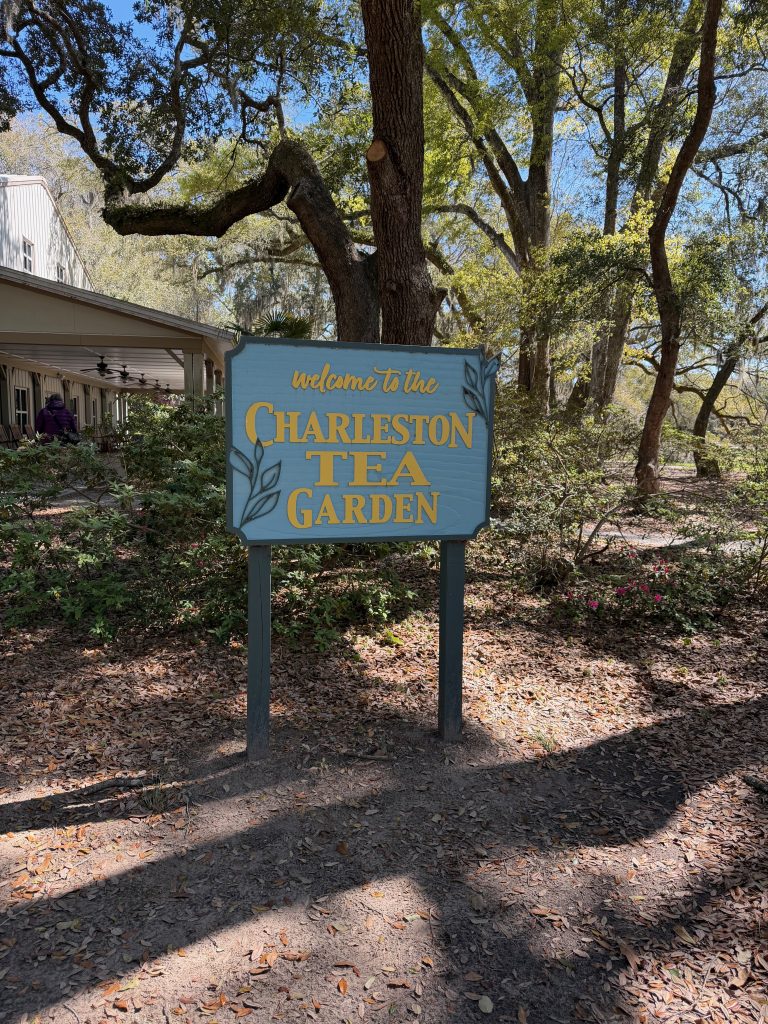
There is only one working tea garden in North America, and it sits quietly on Wadmalaw Island, about twenty-three miles southwest of downtown Charleston. That single fact should be enough to make you clear your afternoon schedule, but once you actually arrive at the Charleston Tea Garden, you realize that the backstory is almost beside the point. The place itself is just that good.
The garden sprawls across 127 acres of low, rolling fields lined with neat rows of the Camellia sinensis plant — the very shrub whose leaves have been brewed into tea for thousands of years. The rows stretch toward the tree line in every direction, trimmed to waist height and a vivid, almost unnaturally saturated green. On a clear morning, with the coastal light coming in low and a faint salt breeze off the Wadmalaw River, the scene looks more like something from the foothills of Darjeeling than the American South. Except it is unmistakably the South, and that contradiction is exactly what makes this place stick with you.
The garden has been producing tea on this land since 1963, when the Lipton Tea Company established it as a research and cultivation site. Today it operates as an independent, visitor-friendly destination that feels genuinely proud of what it grows here. You can take the Trolley Tour — a narrated ride through the fields on a converted flatbed — where the guides explain the harvest cycle, the cultivating methods, and the surprisingly fascinating history of American tea production. It runs on weekends and is well worth the modest ticket price, especially if you bring someone who thinks they already know everything about tea. They will leave humbled and delighted.
The gift shop and tasting room is where things get personal. The garden produces its own American Classic Tea line, and sampling them side by side — the light, grassy First Flush alongside the deeper, more amber harvest blends — is the kind of quiet sensory experience that sneaks up on you. You came for curiosity and you leave with three tins tucked under your arm and a new opinion about what good tea actually tastes like.
Wadmalaw Island itself is worth the drive. The route down Highway 700 passes through marsh and farmland and small communities that feel genuinely removed from the tourist bustle of the peninsula. It is the unhurried Charleston that still exists if you know which roads to take.
The Charleston Tea Garden is open to visitors Tuesday through Sunday, and admission to the grounds is free. The trolley tours are ticketed and run on a set schedule, so check the website before you go and arrive a few minutes early. Wear comfortable shoes — the paths between the rows are not paved — and bring a light jacket in the cooler months because the fields stay exposed to the breeze.
If your Charleston trip has been heavy on church steeples and candlelit dining rooms, an afternoon at the tea garden is exactly the kind of counterweight that makes a visit feel complete. It is agricultural, it is peaceful, and it is the sort of place that reminds you why travel is worth doing in the first place.