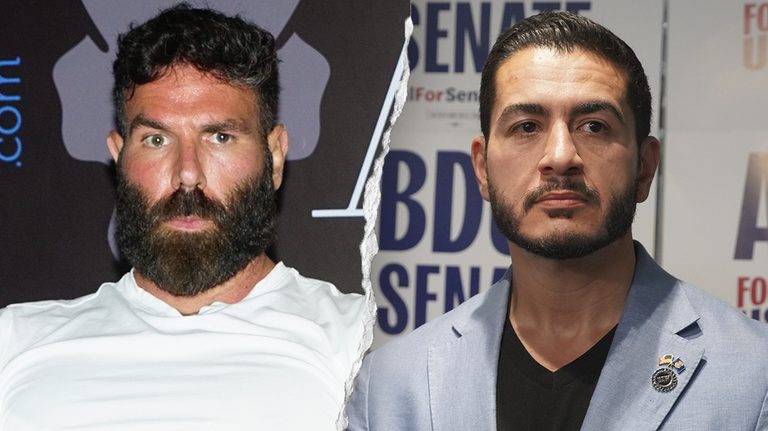
Michigan voters learning about the upcoming U.S. Senate race should note a surprising financial overlap between Democratic candidate Abdul El‑Sayed and former Republican congressional candidate Dan Bilzerian. A Fox News Digital analysis of Federal Election Commission (FEC) filings reveals that the two campaigns share almost 24 donors, contributing a combined $61,000.
Donor totals and individual contributions
According to the review, donors gave $23,144.12 to Bilzerian’s campaign and approximately $38,626.20 to El‑Sayed’s campaign. The shared contributors include several individuals known for their outspoken criticism of U.S. aid to Israel.
Key shared donors
Georgia attorney Ibrahim Awad, who runs Awad Law Firm, contributed $12,651.88 through a joint‑fundraising committee supporting Bilzerian on April 25, 2026, and earlier gave $7,000 directly to El‑Sayed’s campaign. Awad, whose mother was born in Gaza, has publicly described the situation in Gaza as a present‑day Holocaust and has denounced Zionism as a “toxic way of thinking.”
Texas resident Hussein “Sam” Mahrouq, owner of Enterprises International (the parent of AutoMax and Dollar Rent‑A‑Car), donated $3,500 to El‑Sayed between May 2025 and April 2026 and more than $1,000 to Bilzerian via a joint‑fundraising committee. Mahrouq also contributed $400,000 to American Priorities PAC, a group formed to counter the American Israel Public Affairs Committee.
Muhi Khwaja, co‑founder of the American Muslim Community Foundation, gave $625 to El‑Sayed and $26.68 to Bilzerian. Khwaja has written about the humanitarian impact of the Israel‑Hamas war and called for broader compassion toward Palestinians.
Policy differences despite shared backers
While the donors overlap, the two candidates stand on opposite sides of many policy issues. Bilzerian supported the Trump administration’s mass‑deportation efforts and advocates for lower taxes and reduced regulation. In contrast, El‑Sayed calls for the abolition of ICE, higher taxes on the wealthy, and a Medicare‑for‑All health system.
Both candidates have criticized U.S. aid to Israel. Bilzerian’s campaign featured anti‑Israel rhetoric, including a 2½‑minute AI‑generated ad that called Rep. Randy Fine a “fat Jew.” El‑Sayed has repeatedly accused Israel of committing “genocide” against Palestinians and has been linked to social‑media influencer Hasan Piker, who described Hamas as “a thousand times better than the fascist settler‑colonial apartheid state.”
Local implications for Michigan voters
The donor overlap highlights a broader national conversation about how money influences political messaging on foreign policy, especially regarding Israel. For Michigan’s electorate, the shared financial support may raise questions about the motivations behind campaign contributions and whether donor interests could shape candidate positions.
Both campaigns have faced scrutiny. Bilzerian lost the primary to Rep. Randy Fine, whose campaign was marred by the antisemitic ad. El‑Sayed’s ties to controversial figures have drawn criticism from Jewish community leaders and pro‑Israel groups.
What voters should consider
Michigan voters should weigh the policy platforms of each candidate, their voting records (where applicable), and the sources of their campaign funding. While the shared donors do not necessarily dictate policy, the connections underscore the importance of transparency in campaign finance.
As the primary filing deadline approaches, both campaigns are likely to continue seeking additional contributions. Voters are encouraged to review the latest FEC filings for the most up‑to‑date information on donor contributions.
Original reporting: Fox News (HLL/CB) — read the source article.