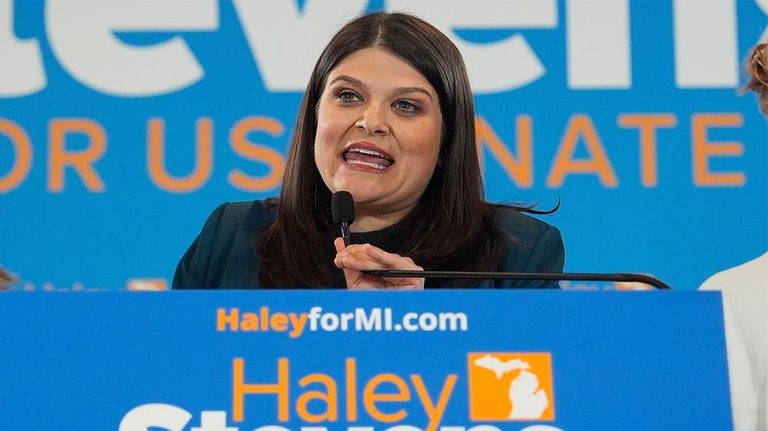
In a televised interview on Sunday, Rep. Haley Stevens (D‑MI) declined to say she was “fully behind” Democratic Senate nominee Abdul El‑Sayed. The exchange, conducted by CNN’s Dana Bash, underscored persistent fractures within Michigan’s Democratic coalition after a bitter primary that pitted the two candidates against each other.
Stevens’ cautious response
When asked why she had not campaigned alongside El‑Sayed despite endorsing him after the primary, Stevens pointed to her ongoing work for Democratic House candidates across the state. Bash pressed further, asking directly if Stevens was “still fully behind” El‑Sayed. Stevens answered, “Look, I’m on the Democratic ticket. I can’t say that I agree with everything that’s gone on,” before adding, “I’m on the team.”
Focus on other Democratic races
Stevens emphasized her support for Democratic gubernatorial nominee Jocelyn Benson and various House candidates, but she did not mention El‑Sayed by name. The omission highlighted lingering tension, especially as El‑Sayed seeks to consolidate support among Black and Jewish voters—constituencies that Stevens’ campaign has historically courted.
Outreach concerns
Stevens also raised concerns about El‑Sayed’s outreach to Black voters, recalling a request she made for him to deliver a speech in the Black community. “I had said to, you know, the coordinated campaign, I’m like, hey, give a speech in the Black community, right?” she said. “But yeah, I mean that didn’t happen. That speech hasn’t happened,” Stevens added.
Implications for the general election
El‑Sayed now faces former Republican Rep. Mike Rogers in a closely watched race to succeed retiring Democratic Sen. Gary Peters. The contest is seen as a test of the Democratic Party’s progressive wing, with El‑Sayed advocating for Medicare‑for‑all and an end to U.S. military aid to Israel. Rogers, meanwhile, portrays El‑Sayed as out of step with Michigan’s political mainstream.
Local political dynamics
The discord between Stevens and El‑Sayed reflects broader debates within Michigan’s Democratic Party over policy direction and voter outreach. While Stevens continues to champion traditional Democratic candidates, El‑Sayed’s progressive platform seeks to energize new constituencies. How these internal dynamics play out could influence voter turnout and the ultimate balance of power in the U.S. Senate.
Looking ahead
As the midterm elections approach, both candidates will need to address the concerns raised by party insiders and voters alike. Stevens’ remarks suggest that El‑Sayed must intensify his outreach efforts, particularly to Black and Jewish communities, if he hopes to secure a decisive victory over Rogers in November.
Original reporting: Fox News (HLL/CB) — read the source article.