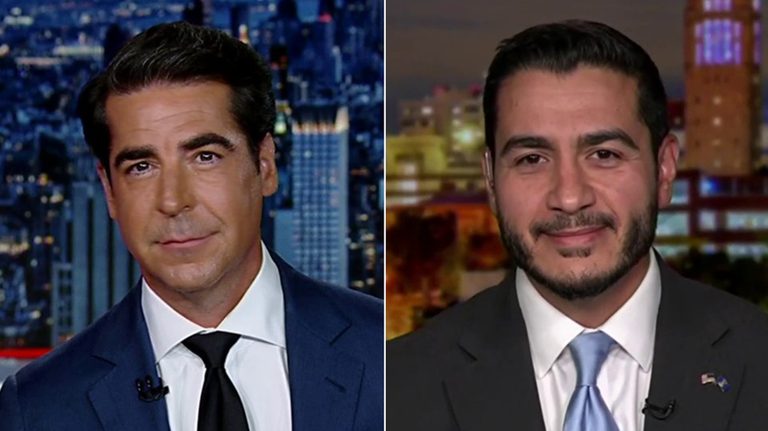
Michigan Democratic Senate candidate Abdul El‑Sayed sparked a heated debate on Monday night after Fox News host Jesse Watters asked him to explain a past comment in which he suggested that opposition to Sharia law could be framed as “White supremacy.” El‑Sayed responded by drawing a parallel between Sharia, the Islamic legal system, and the Catholic Church’s canon law.
“Nobody is trying to push Sharia law on anyone else, just like I hope nobody is trying to push canon law on anybody else, because we live in an America where you should have the freedom of your religion,” El‑Sayed told Watters.
Conservative backlash
The comparison quickly attracted criticism on social media. Andrew Kolvet, executive producer of “The Charlie Kirk Show,” wrote on X that El‑Sayed “lies” and that canon law is limited to church affairs, whereas Sharia law governs all aspects of life and is “incompatible with Western Civilization.” Political commentator Carl Jackson echoed the sentiment, calling the candidate’s remarks a “victim card” to avoid scrutiny of Islam.
Other conservative voices, including Kaylee McGhee White, Dana Loesch, Michael Knowles, and Pamela Geller, denounced the defense as a false equivalency and warned that Sharia law threatens the nation’s legal foundations.
El‑Sayed’s prior statements
The Fox News team also noted that El‑Sayed has previously said he feels religiously obligated to follow Sharia‑compliant practices. In a 2009 interview with The New York Times, he explained that he would not want to die without having lived according to Sharia because of a sense of divine duty.
El‑Sayed has long opposed bans on Sharia law, arguing that such efforts are rooted in White supremacy. He cited the 2022 Oklahoma referendum that amended the state constitution to ban Sharia, saying the vote reflected the same forces that historically displaced Native peoples and destroyed Black Wall Street.
Context and implications
The controversy arrives as El‑Sayed seeks the Democratic nomination for the U.S. Senate seat in Michigan, a race that will likely be decided in the 2026 midterm elections. His remarks have placed the issue of religious liberty and the role of Sharia law at the forefront of the campaign, drawing clear lines between faith‑based arguments and the broader cultural debate over the place of Islamic jurisprudence in American law.
While the candidate maintains that he supports religious freedom for all faiths, critics argue that equating Sharia with canon law downplays the comprehensive nature of Islamic legal codes, which they say can affect civil matters such as marriage, inheritance, and criminal penalties.
The story underscores the ongoing tension between religious liberty claims and concerns about the compatibility of certain religious legal systems with the Constitution, a theme that will likely continue to surface as the Michigan Senate race progresses.
Original reporting: Fox News (HLL/CB) — read the source article.