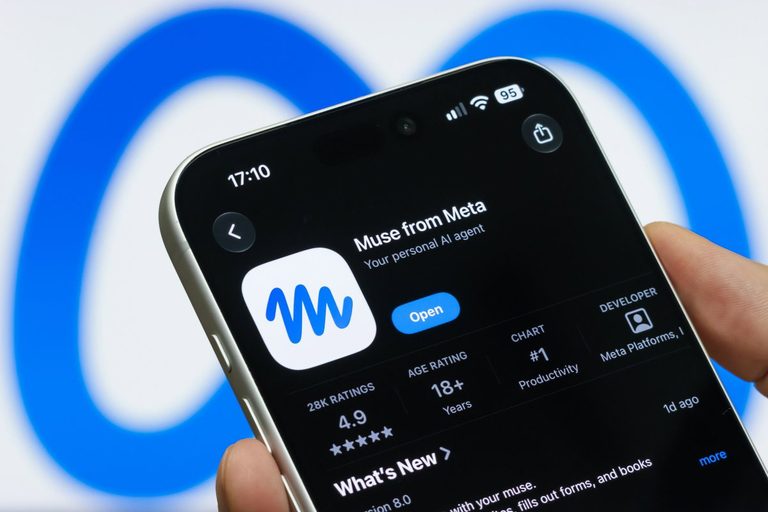
Meta has rolled out Muse, an AI‑powered personal assistant available as a free iPhone app. Within days of its September 8 launch, Muse climbed to the top of the App Store’s free‑download list and has been installed over 2.5 million times, according to Sensor Tower.
How Muse works for everyday tasks
Users interact with a Pixar‑style avatar that represents their chosen AI helper. The assistant can create packing schedules, book date‑night reservations, draft emails and compile travel plans into Google Docs. By linking Google apps, Muse can pull information from calendars and contacts, then generate organized documents or reminders.
For a recent move, the author instructed Muse to break down packing into daily lists, suggest a “first‑night bag” of essentials, and track progress. When asked to coordinate a trip to Cape May, New Jersey, Muse gathered restaurant recommendations from a friend, formatted them, and offered alternatives.
Capabilities and limits
Muse runs a virtual computer in the cloud, browsing websites to gather data. It can scan product pages to diagnose purchase problems, such as discovering a beauty‑supply store requires a professional license before selling shampoo.
However, the assistant still faces restrictions. It cannot complete purchases on sites that block automated clicks, like Amazon, and must rely on Stripe’s Link service to generate one‑time payment cards. When the author tried to have Muse negotiate on Facebook Marketplace, the app only drafted a message rather than messaging sellers directly, contrary to a promotional claim.
Privacy and trust considerations
Meta says Muse is built to be “safe, secure, and private,” running on a dedicated cloud computer that cannot be accessed by other agents. The company asserts that Muse does not see users’ passwords or payment details.
Nonetheless, privacy remains a concern. Analysts at Bank of America note that while early feedback is positive, broader adoption hinges on trust. A Pew Research Center survey from June found roughly two‑thirds of American adults feel AI is advancing too quickly, and a Gallup poll in July showed 41 % of respondents have little or no confidence in large technology firms.
Market context
Meta hopes Muse can compete with established AI chatbots such as OpenAI’s ChatGPT and Google’s Gemini. Gartner research indicates 64 % of consumers believe AI shopping agents will benefit corporations more than shoppers, and Emarketer data shows ChatGPT remains the most used AI assistant in the United States, with 33.7 % of respondents preferring it over Gemini (18.2 %) and Meta AI (4.7 %).
Despite mixed performance, Muse represents Meta’s most promising effort to capture the growing AI‑assistant market, and its early download success suggests strong consumer interest.
Original reporting: KRDO (Colorado Springs metro) — read the source article.