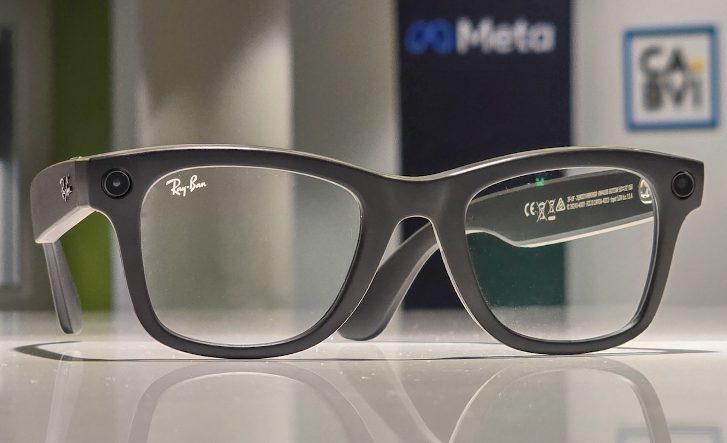
Meta has launched a nationwide effort to give 130,000 AI‑enhanced glasses to legally blind veterans across the United States. The first batch of devices was distributed in Cincinnati, Ohio, at the Cincinnati Association for the Blind and Visually Impaired.
The program is being carried out in partnership with the Blind Veterans Association, a nonprofit that advocates for veterans with seeing impairments. At a recent training session, dozens of veterans learned how the glasses work and how they can restore a measure of independence in daily tasks.
Veterans share their experience
Among the recipients was 84‑year‑old Charly Sapp, a former Navy engineer who lost his sight eight to ten years ago after a childhood disease. Sapp described the technology as “amazing” and noted that the glasses can read printed text, allowing him to navigate signs and documents more easily.
“I can see everything, but it’s really fuzzy,” Sapp said, explaining how the device sharpens visual input and reads print aloud. “It’s kind of amazing that the glasses can read print,” he added, expressing renewed hope for greater independence.
Blind Veterans Association leadership comments
Lea Rowe, national executive director of the Blind Veterans Association, praised the partnership, saying, “The light bulb that goes off for our veterans is what makes me most excited—seeing that there is still a little bit of hope out there, especially when you’re living in isolation or feel you’ve completely lost all independence and are relying on somebody else.”
Rowe emphasized that the program is not limited to those who could attend the training. Veterans with seeing impairments who missed the event can still contact the association to receive a pair of glasses.
How the glasses work
The AI glasses use computer‑vision algorithms to identify objects, read text, and provide audio feedback through a discreet earpiece. Users can point the glasses at a sign, document, or product label, and the system will speak the information aloud, helping them navigate public spaces and manage everyday tasks.
Meta says the technology is designed to be lightweight, comfortable, and easy to operate, with voice commands that allow users to request information without needing to press buttons.
Community impact
Local veterans groups and community leaders have welcomed the initiative, noting that it aligns with Cincinnati’s long‑standing support for veterans and people with disabilities. The distribution event also highlighted the city’s broader commitment to accessibility and innovation.
By providing these devices, Meta hopes to demonstrate how private‑sector technology can serve public good, especially for those who have sacrificed for the nation. The program will continue to roll out to other cities, with the goal of reaching every legally blind veteran in the United States.
Original reporting: WLWT Cincinnati — read the source article.