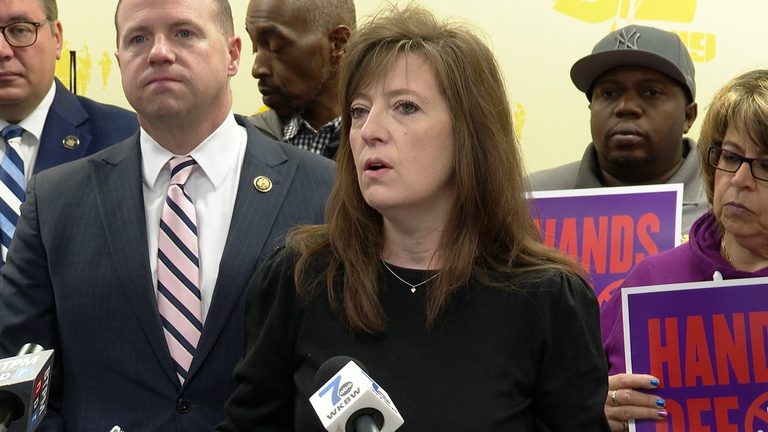
Congressman Tim Kennedy joined union health‑care leaders Tuesday at the 1199 SEIU offices in Buffalo to sound the alarm over upcoming federal Medicaid changes. The new guidelines, set to begin in January, will require recipients to work at least 80 hours a month to retain benefits.
Local officials voice concern
Denise Abbott, a Western New York Area Labor Federation representative who works in an emergency room, warned that the rule could overwhelm hospitals. “We are going to see people die because they cannot obtain health care,” she said, adding that emergency‑room wait times could stretch from hours to days.
Deputy County Executive Lisa Chimera echoed those worries, noting that one in four Erie County residents—about 250,000 people—currently rely on Medicaid. “There is no evidence of fraud,” Chimera said. “These rules and regulations just create more bureaucracy. If you can just imagine an individual having to call through all this red tape just to get medical care.”
Republican perspective
Republican Congressman Nick Langworthy defended the policy on the House floor, arguing that the work requirement is intended to “root out” waste, fraud and abuse. He said, “They want permanent government dependency. They’ll oppose any form of accountability.”
Langworthy’s stance reflects a broader Republican effort to tighten Medicaid eligibility in order to reduce program costs and encourage employment among beneficiaries.
Political context
Kennedy, a Democrat, criticized the rule as a partisan effort to strip health coverage from vulnerable residents while offering tax breaks to the wealthiest Americans. He urged voters to head to the polls before the end of the year, hoping for a Democratic majority that would prioritize protecting health care.
He added, “When we get the gavels in our hands, we’re going to make protecting health care in America our top priority as majority Democrats.”
What the rule means for residents
According to the source, 92% of current Medicaid enrollees already work or attend school, suggesting many may already meet the new threshold. However, officials warn that the administrative burden of proving compliance could delay care for those who do not meet the hour requirement.
For individuals seeking guidance on the upcoming changes, the New York State of Health website offers resources and assistance.
Next steps
Congress has until the end of the year to act on the Medicaid cuts. Both sides of the aisle are mobilizing: Democrats are urging voter turnout, while Republicans are preparing to defend the policy as a necessary safeguard against program abuse.
Original reporting: WKBW 7 Buffalo (Buffalo section) — read the source article.