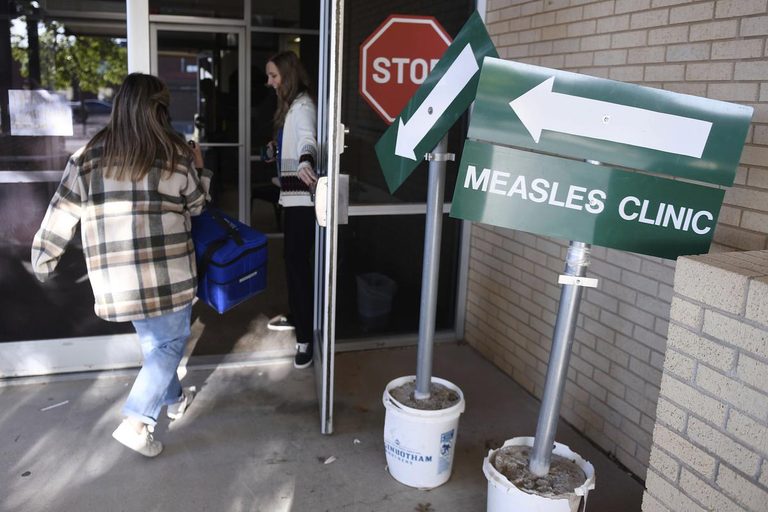
Public‑health officials in southwest Wisconsin are confronting a growing measles outbreak. As of Friday, the state Department of Health Services reported 41 confirmed cases and seven probable cases in Lafayette, Grant and Iowa counties.
Vaccination gaps fuel spread
State data show that every measles patient in Wisconsin this year, except one, was unvaccinated. More than half of the cases involve children and teens, while 44% are adults. The Department of Health Services spokesperson, Jennifer Miller, said the virus is thriving in “pockets of our communities where individuals are under‑vaccinated or unvaccinated.”
Wisconsin’s overall childhood immunization rates have slipped since the COVID‑19 pandemic, and the southwest region was already seeing declining uptake of the measles‑mumps‑rubella (MMR) series before the pandemic. In 2025, only 60% of two‑year‑olds in Lafayette County and just under 64% in Grant County had received at least one MMR dose. Iowa County, where most recent cases have been identified, sits near the state average at roughly 81%, still well below the 95% threshold needed for herd immunity.
Plain communities and vaccine caution
The outbreak has raised concerns among the Amish and Mennonite “Plain” communities that populate the three counties. Wisconsin is home to the nation’s fourth‑largest Amish population, with an estimated 27,535 members statewide and more than 3,000 residing in Grant, Lafayette and Iowa counties.
University of Wisconsin‑Madison professor Mark Louden, who serves as a cultural liaison for the state’s Plain groups, described the communities as “vaccine cautious.” He noted that while most families follow standard health‑care practices, a few choose to limit the number of shots their children receive. Louden said this caution is amplified by information circulating on the internet and from non‑Plain neighbors.
Local response and resources
County officials are mobilizing to contain the spread. Lafayette County Board Chair Jack Sauer recalled that vaccination rates were higher in his youth and suggested that mixed messages from federal leaders have contributed to current skepticism.
Iowa County Health Officer Debbie Siegenthaler urged residents to verify their immunization status through the Wisconsin Immunization Registry or their health‑care provider, especially as children return to school. She also announced a community vaccination clinic at the Mineral Point Rescue Squad office on Monday, Aug. 24, from noon to 5 p.m.
State and local health agencies continue to trace contacts, offer testing and provide vaccines to those who need them. The goal is to halt further transmission before the outbreak expands beyond the three counties.
What families can do
Parents are encouraged to review their children’s vaccination records and consider the MMR series, which protects against measles, a disease that can cause severe complications, including pneumonia, encephalitis and death. The Centers for Disease Control and Prevention recommends a two‑dose schedule for full protection.
Community leaders, faith‑based groups and health professionals are working together to share accurate information and address concerns rooted in cultural practices or misinformation. By increasing vaccination coverage, the region hopes to bring the outbreak under control and protect both children and adults from future outbreaks.
Original reporting: Wisconsin Watch — read the source article.