Massachusetts voters headed to the polls on Tuesday to decide whether 80‑year‑old Senator Ed Markey will retain his seat or be unseated by 47‑year‑old Representative Seth Moulton. While Markey has long championed the Green New Deal, the campaign’s messaging this cycle has shifted dramatically. Both candidates are emphasizing issues that resonate with voters today—affordability, U.S. support for Israel, and how to confront President Trump—while climate change receives far less attention.
Young Democrats note the change
Charles Hughes, a college student who chairs the Massachusetts chapter of the College Democrats, told reporters that climate rarely comes up in campus discussions. “Honestly, it doesn’t come up as much,” he said, noting a stark contrast to the fervor he experienced growing up in Colorado, where climate activism was a daily topic.
Party strategists admit a strategic shift
Mary Anne Marsh, a veteran Democratic strategist, explained that the party’s think‑tank, the Searchlight Institute, has even coined the term “climate hushing.” The institute urged Democrats to stop foregrounding climate because voters are more concerned with immediate economic pressures. “Six years ago, the Green New Deal was every phrase out of Ed Markey’s mouth every chance he got. That is not the case now,” Marsh said.
National context fuels the pivot
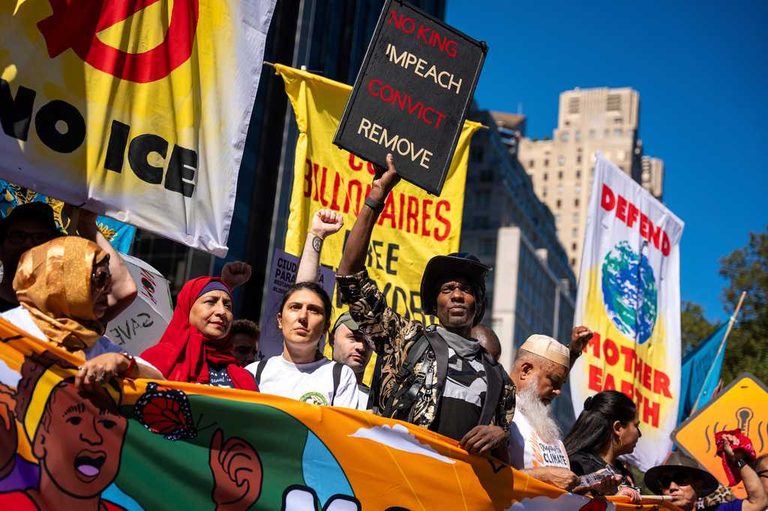
Since President Trump’s election, the Democratic base has redirected its energy toward confronting his administration. The Sunrise Movement, once a leading climate‑focused group, announced last fall that it would broaden its mission to fight what it called “fascism,” citing federal raids on protestors during immigration operations.
Climate still looms, but voters prioritize other concerns
Scientists warn 2026 could become the hottest year on record, with a strong El Niño pushing global temperatures higher. Yet a Pew Research Center poll from April shows only about six in ten Democrats consider climate a “very big problem,” a figure similar to 2016. Voters instead rank inflation, healthcare affordability, and the influence of money in politics as top concerns.
Markey’s climate line in the sand
During a recent debate, a voter asked both candidates how they would lower energy costs. Markey seized the moment to criticize President Trump, saying, “There was a plan in place to have a strong, clean, affordable energy future for our commonwealth, and Trump attacked it.” The response framed climate policy as part of a broader fight against the president rather than a standalone issue.
What this means for Massachusetts voters
For local constituents, the primary will likely be decided on how each candidate addresses the cost of living and national security, not on the specifics of carbon emissions. As the race unfolds, the Democratic Party’s strategic decision to downplay climate may shape future policy debates, especially if they regain control of the U.S. House later this year.
Looking ahead
Experts like Leah Stokes of UC Santa Barbara warn that sidelining climate could delay necessary action, risking more severe weather and economic impacts. Yet for now, the political calculus in Massachusetts reflects a party focused on winning elections by speaking to the immediate worries of its electorate.
Original reporting: KCCI Des Moines — read the source article.