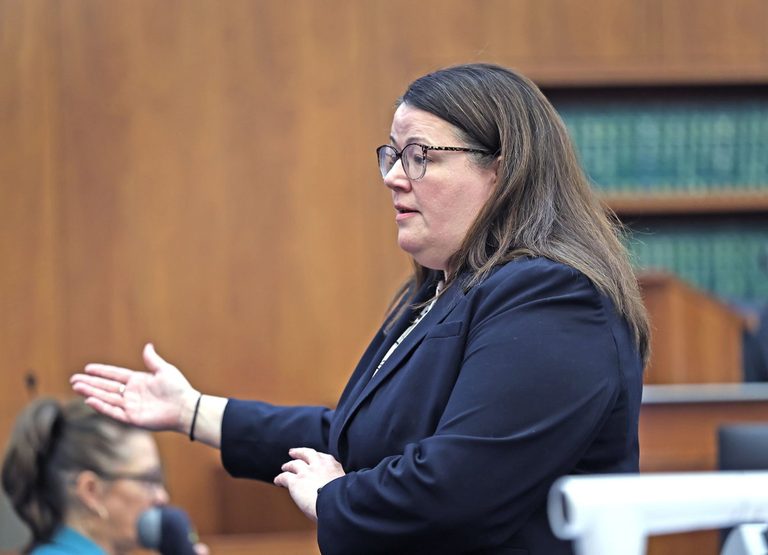
A Massachusetts jury resumed deliberations Monday in the high‑profile case of former labor‑and‑delivery nurse Lindsay Clancy. The 36‑year‑old has pleaded not guilty to the deaths of her three children—Cora, 5; Dawson, 3; and Callan, 8 months—who were strangled with exercise resistance bands on Jan. 24, 2023.
Legal questions before the jurors
The jurors are considering five possible outcomes: first‑degree murder, second‑degree murder, manslaughter, not guilty by lack of criminal responsibility, or a simple not‑guilty verdict. First‑degree murder requires proof of deliberate premeditation or extreme cruelty and carries life without parole. Second‑degree murder carries life with the possibility of parole, while manslaughter could result in up to 20 years.
If the jury finds Clancy was not criminally responsible, the court may commit her to a mental‑health facility after a hearing. Initial commitments last six months, with subsequent periods of up to one year, and there is no statutory limit on re‑commitments.
Prosecution vs. defense arguments
Both sides agree Clancy suffered postpartum mental‑health issues beginning in September 2022. Prosecutors argue she retained the capacity to understand the wrongfulness of her actions, noting she sent her husband out on errands before the killings and requested an attorney upon waking in a hospital.
Defense attorney and forensic psychiatrist Dr. Phillip Resnick testified that Clancy was experiencing postpartum psychosis, hearing a persistent male voice urging her to kill her children and herself. He described her as “a puppet with someone else pulling the strings.”
Community response and broader implications
The trial has drawn attention to maternal mental‑health challenges. A group of women in pink gathered outside the courthouse to show support for Clancy and to raise awareness of postpartum mental illness.
Clancy, who is partially paralyzed, has been held at Tewksbury Hospital since 2023 and remains under the highest level of suicide precautions, according to psychologist Dr. Kirk Heilbrun.
The verdict will have significant implications for how the legal system handles cases involving severe mental‑health disorders and parental responsibility.
Original reporting: KTVZ (Central Oregon) — read the source article.