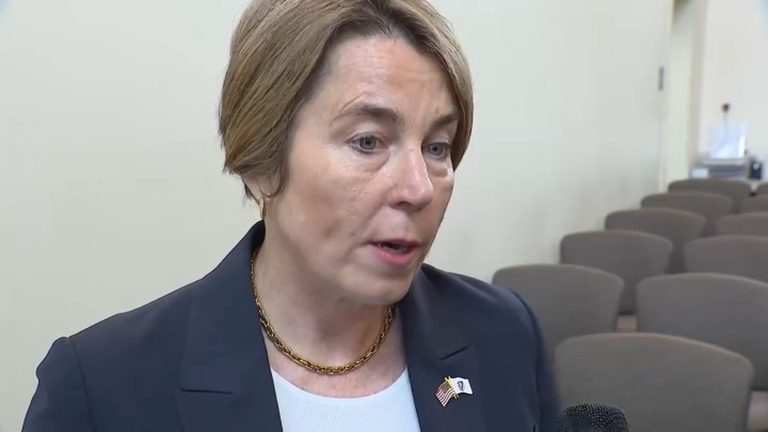
Governor Maura Healey is set to address the public Tuesday afternoon at the Massachusetts State House, where she will outline a new regulatory framework for artificial intelligence data centers across the Commonwealth. The press conference, scheduled for 1:30 p.m., will detail expectations for developers to protect local communities from rising energy costs and environmental impacts while still encouraging high‑paying jobs and investment.
Local concerns and statewide debate
Recent polling by NBC News Decision Desk, conducted Aug. 20–Sept. 1, shows that 69% of Massachusetts residents oppose the construction of AI data centers in their neighborhoods, with 45% strongly opposed. The poll reflects a growing unease about the electricity, water, and noise demands of large‑scale facilities.
Economic promise versus environmental cost
Supporters argue that data centers generate well‑paid positions, attract capital, and strengthen the state’s digital infrastructure. Critics, including environmental groups, warn that hyperscale facilities consume massive amounts of power and can create air and noise pollution that burden nearby residents.
Case study: Lowell’s Markley Group campus
In Lowell, the Markley Group has invested more than $600 million to convert the former Prince Spaghetti factory into a 14‑acre data‑center campus. While the company says its project differs from the larger hyperscale sites driving the AI boom, the development still relies heavily on skilled union labor and is expanding its occupied space at a steady pace.
Policy background
Massachusetts approved a tax incentive for data‑center development in 2024, but Governor Healey placed a pause on new projects in June. She called for developers to adopt safeguards that prevent higher energy bills for host communities and to address the environmental trade‑offs of rapid expansion.
Local actions across the state
Several municipalities have already taken steps to limit growth. Lowell and Mansfield have enacted moratoriums on new data‑center construction, while Holyoke became the first city in the Commonwealth to impose a citywide ban.
What’s next?
The upcoming announcement is expected to clarify how the state will balance economic opportunity with the need to protect families, neighborhoods, and the environment. Residents and business leaders alike will be watching for concrete guidelines that could shape the future of Massachusetts’ digital economy.
Original reporting: NBC10 Boston — read the source article.