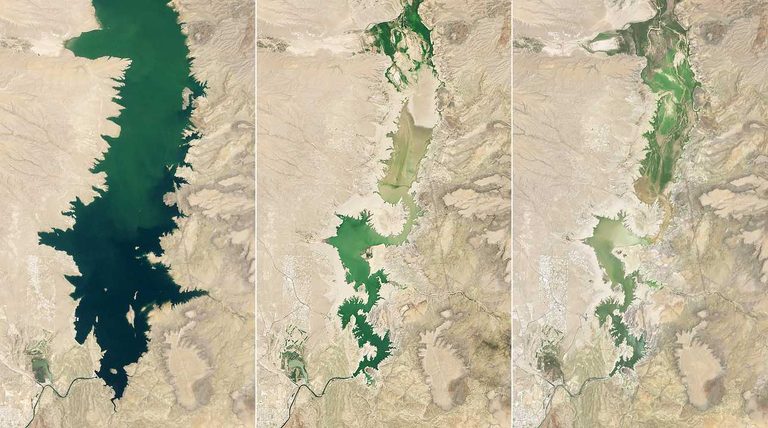
NASA satellite photos released this week reveal the stark reality of New Mexico’s ongoing drought: Elephant Butte Reservoir, the state’s largest water storage facility, is down to roughly 1% of its full capacity. The images, taken over the past several months, show a dramatic drop in water levels that have not been seen since the reservoir was last full in 1994.
Local recreation hit hard
Elephant Butte, a popular destination for boating, wakeboarding, and jet skiing, has already felt the strain. Earlier this summer, the lake’s boat ramps were temporarily closed because the water had receded so far that the ramps were exposed to a layer of mud and sediment. “There’s about 4 or 5 feet of mud on top of the ramp, and as boats back in, they’re hitting that sediment. So as we remove it and keep it removed, it gives that flat surface and [allows people to] launch and retrieve their vessels,” explained Johnathin Horsley, a local water‑recreation official.
Cleanup crews on the shoreline
With the water level so low, debris that has lain dormant for decades is now exposed along the shoreline. Crews have been dispatched to remove items ranging from old cell phones to household appliances dating back to the 1980s and 1990s. The effort aims to keep the area safe for the few visitors who still venture out for water‑based activities.
Still some water‑sport options
Despite the severe drawdown, officials note that there remains enough water for certain activities such as wakeboarding and jet skiing. However, the reduced surface area has limited launch points and increased the risk of boats striking submerged objects.
What the drought means for the region
Elephant Butte’s plight is a microcosm of the broader water crisis affecting the Southwest. The reservoir’s decline underscores the need for responsible water management, conservation measures, and long‑term planning to sustain both agricultural needs and recreational tourism that many local economies depend on.
Looking ahead
State officials are monitoring the situation closely and are urging residents to conserve water wherever possible. While the reservoir’s current state is dire, the continued presence of water for limited recreation offers a glimmer of hope that, with prudent stewardship, the lake can remain a community asset even during prolonged dry spells.
Original reporting: KOAT Albuquerque — read the source article.