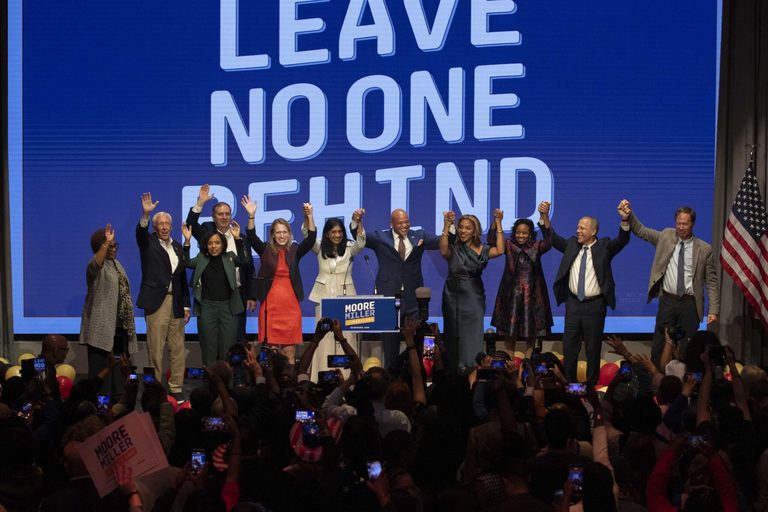
College Park, MD – Maryland voters approved Question 3 on Tuesday, granting the party that controls the state legislature the authority to redraw the state’s congressional districts. The measure passed despite mixed reactions from voters across the political spectrum.
What Question 3 Does
The ballot initiative gives the majority party the flexibility to set new congressional boundaries after each census. Proponents argue the change will prevent partisan gerrymandering and return map‑making power to elected officials rather than unelected commissions.
Governor Wes Moore’s Campaign
Governor Wes Moore, who won re‑election this fall, campaigned heavily for the measure. Moore told reporters, “We are going to make sure that we vote yes on Question 3 because we control our democracy. Donald Trump is not going to unilaterally just redistrict this entire nation.” The governor framed the vote as a safeguard against outside interference in Maryland’s elections.
Democratic Lawmakers Celebrate
Newly elected Representative Adrian Boafo called the passage “our best chance at stopping Donald Trump” and praised the measure as a victory for Maryland voters. Representative Jamie Raskin added, “The people he tried to gerrymander out of power are winning, and we stuck it to him in Maryland tonight with Question 3.” Both lawmakers highlighted the win as a step toward genuine redistricting reform.
Republican Opposition
Republican leaders warned the measure would give Democrats an unfair advantage. U.S. Rep. Andy Harris, the lone Republican congressman from Maryland’s 1st District, urged supporters to “stop the Wes Moore agenda” and vote against the question. Harris argued the change could jeopardize his seat, though he will not face a new map until at least 2028.
Mixed Public Sentiment
Voters of both parties expressed reservations at polling sites. Gabriella Cox, a 23‑year‑old Democrat from Cambridge, said she was “very against redistricting” and didn’t think it should be a Democratic ideal. Tom Greening, a 78‑year‑old self‑identified “Republican person,” echoed the sentiment, noting, “Two wrongs don’t make a right… Democrats are trying to do the same wrong thing that the Republicans are doing.”
Democratic Caution
Even some Democratic officials urged prudence. Representative Johnny Olszewski said he supports Maryland’s right to respond to Republican map changes but added, “I would rather that need not exist here or anywhere else.” He called for broader federal reform to address redistricting nationwide.
Implications for Future Elections
With the measure approved, the state legislature will begin the redistricting process ahead of the 2028 congressional elections. While Democrats see an opportunity to create more competitive districts, Republicans fear the new maps could make incumbent seats, such as Rep. Harris’s, more vulnerable.
What Comes Next
The legislature is expected to hold public hearings and draft new district proposals over the next year. Stakeholders, including community groups and advocacy organizations, plan to submit input during the process. The final maps will be subject to legal review before they take effect.
Original reporting: Baltimore Fishbowl — read the source article.