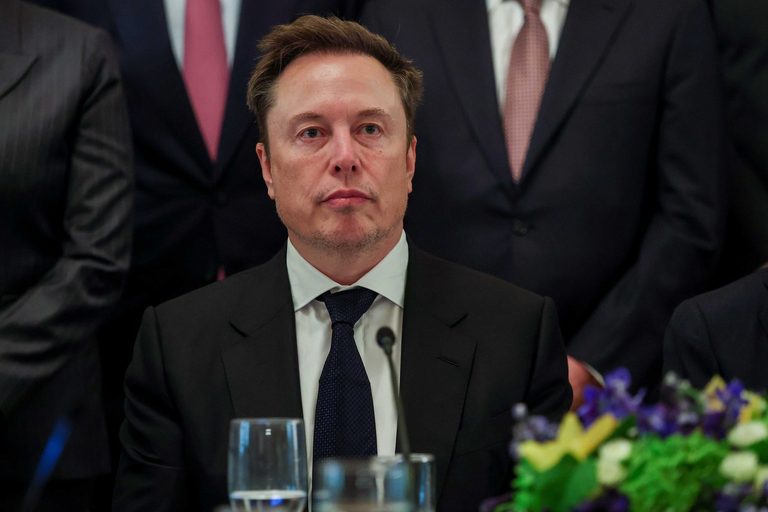
In the wake of the 2026 midterm elections, billionaire entrepreneur Elon Musk emerged as the single largest individual donor, spending nearly $500 million on federal and state races. While his contributions were intended to bolster Republican candidates, the results in Texas and across the nation tell a different story.
Massive Outlays, Minimal Impact
OpenSecrets reports that Musk contributed at least $445 million between January 2025 and October 2026, the highest total by any individual this cycle. The New York Times estimates the figure at $474 million, noting that the tally likely understates the true amount because it excludes dark‑money spending and certain expenditures by America PAC.
The lion’s share of Musk’s money—$212 million—was directed to Texas U.S. Senate hopeful Ken Paxton, whose campaign ultimately fell short. An additional $12.3 million went to other Texas political groups, bringing his total Texas outlay to $224 million.
Democratic Sweep Defies Billionaire Influence
Despite Musk’s heavy investment, Democrats won every statewide race in Texas on Election Day. Newly elected Senator‑elect James Talarico, a Democrat, declared, “We just proved that all the money in the world is no match for the people of Texas,” and warned other billionaire megadonors that their influence has limits.
Musk’s messaging painted Talarico as a “far‑left extremist” who supports open borders and radical gender‑affirming policies. Nevertheless, Talarico’s victory, along with other Democratic gains, suggests that voters responded more to policy positions than to financial pressure.
National Landscape Mirrors Texas Results
Beyond Texas, Musk’s contributions extended to national Republican efforts. He donated $30 million to the Congressional Leadership Fund, the House GOP super PAC tasked with preserving control of the chamber. The super PAC’s performance fell short, as Democrats are projected to secure more than 250 House seats.
Other recipients of Musk’s money included Ohio Senate candidate Jon Husted and Michigan Senate hopeful Mike Rogers, both of whom were defeated. In Ohio’s gubernatorial race, Musk backed Vivek Ramaswamy, who lost to Democrat Amy Acton.
Musk’s Reaction on X
Following the results, Musk posted a brief, cryptic comment on his X platform, noting that “Data centers in space looking pretty appealing right now,” and later added, “Guess my election‑interfering space lasers didn’t work this time.” The remarks underscore his frustration but also his continued focus on his core businesses.
What This Means for Future Campaigns
The 2026 midterms illustrate that even unprecedented financial backing cannot guarantee electoral success. While Musk’s spending set a new record for individual contributions, the outcomes in Texas and nationwide reinforce the principle that voters ultimately decide the direction of government.
For Republican strategists, the lesson may be to pair fundraising with grassroots outreach and clear policy messaging. For Democrats, the results validate a strategy that emphasizes voter engagement over opponent fundraising.
As the next election cycle approaches, both parties will likely reassess the role of mega‑donors in shaping campaign dynamics, especially in swing states where the balance of power remains delicate.
Original reporting: WPBF West Palm Beach — read the source article.