Portland, Ore. – The Oregon Zoo announced that Tula‑Tu, the Asian elephant calf born in 2025, is showing steady improvement after a serious bout of elephant endotheliotropic herpesvirus (EEHV‑1B). Veterinary staff have been providing round‑the‑clock care, including antiviral medication, fluid therapy and multiple plasma transfusions.
Medical care and early signs of improvement
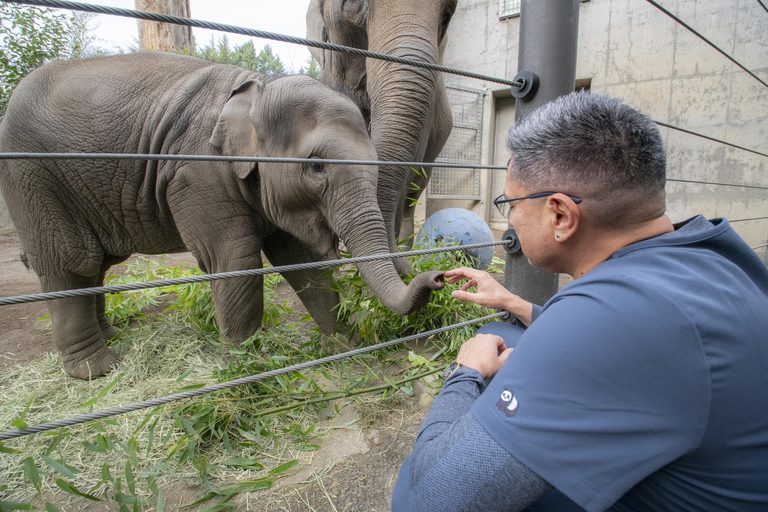
Dr. Carlos Sanchez, director of animal health at the zoo, said the calf remains in a guarded condition but is “showing encouraging signs.” Her white‑cell counts are nearly back to normal, the viral load is trending down, she appears more alert and her appetite has improved. “She’s a tough little elephant,” Sanchez added.
Background on the virus and vaccine effort
Earlier this year Tula‑Tu became the first elephant on the West Coast to receive an mRNA vaccine designed to protect against EEHV‑1A. While both EEHV‑1A and EEHV‑1B can cause severe disease in young Asian elephants, EEHV‑1B is a distinct, related strain. Researchers do not yet know whether the EEHV‑1A vaccine offers any protection against the –1B variant, and the zoo is monitoring the situation closely.
Daily life for the recovering calf
During her convalescence Tula‑Tu has been allowed limited outdoor time in a behind‑the‑scenes yard and has spent time inside Forest Hall with her mother, Rose‑Tu, her father, Samson, and her aunts Sung‑Surin and Chendra. Staff observed her nursing with her mother and playing with a large blue ball that previously belonged to Rose‑Tu.
Research and collaboration
Blood samples are being sent regularly to the Oregon Veterinary Diagnostic Laboratory at Oregon State University, Baylor College of Medicine and the Smithsonian’s National Elephant Herpesvirus Laboratory. The data support joint research aimed at better understanding elephant vaccine responses.
EEHV is a latent virus present in nearly all Asian elephants, both in the wild and in human care. Calves become highly susceptible as maternal antibodies wane, typically between ages one and eight. Active infections can become life‑threatening within days, as illustrated by the 2018 death of Lily, another calf of Rose‑Tu, who succumbed to the virus shortly before her sixth birthday.
Impact on global conservation efforts
Dr. Sanchez, who chairs the North American EEHV Advisory Group Research Committee, emphasized that zoo‑based monitoring provides critical data that field researchers cannot easily obtain. “The work we’re doing now could play a significant role in protecting future elephant calves, including those in range countries,” he said.
The Oregon Zoo also helped establish Sabah’s first hematology lab in 2023 to track EEHV in wild and captive elephants, and its veterinary team continues to provide clinical training and diagnostic support to wildlife health practitioners throughout Southeast Asia.
Looking ahead
While the exact degree of protection the EEHV‑1A vaccine may confer against the –1B strain remains unknown, the zoo’s proactive treatment and ongoing research give hope for improved outcomes for young elephants both here and abroad.
Original reporting: KTVZ (Central Oregon) — read the source article.