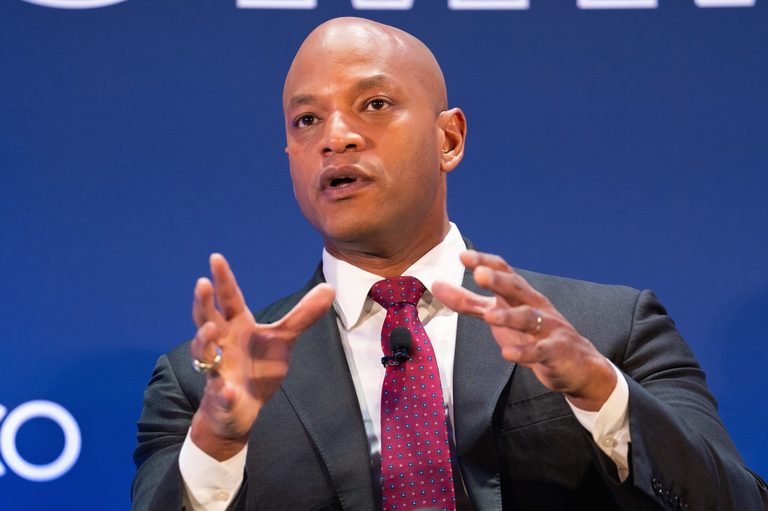
Maryland Governor Wes Moore used a recent innovation conference in Baltimore to unveil a bipartisan coalition of governors aimed at establishing a coordinated framework for artificial‑intelligence oversight. Moore, who chairs the National Governors Association this year, said the effort is necessary because the federal government has yet to provide clear leadership.
State leaders step in as Washington lags
Moore, a Democrat, warned that without decisive action from the White House and Congress, “the governors cannot just sit on our hands.” He noted that several states—including Maryland, California, Illinois, Oregon and Virginia—have already issued executive orders or taken other steps to set standards for AI development and deployment.
Republican Governor Mike Braun of Indiana will co‑chair the initiative with Moore, and additional governors from both parties are expected to join. The group plans to draft a set of guiding principles that can be adopted by states while a federal solution is still pending.
President Trump’s stance on AI
President Trump has repeatedly dismissed alarmist warnings about AI as a “hoax,” arguing that the United States must remain competitive with China’s rapid technological advances. He highlighted the importance of data‑center expansion for economic growth and praised industry leaders for their “tremendous self‑policing” during a recent White House meeting.
Moore questioned the meeting’s lack of emphasis on transparency or regulatory guardrails, but he also acknowledged the president’s broader goal of keeping America at the forefront of innovation.
Why the governors’ coalition matters
The AI landscape evolves faster than traditional legislative cycles, and state officials say a unified approach can help protect citizens while fostering responsible innovation. Moore emphasized that his own values remain steady even as technology “moves at such a rapid clip.” He added that elements of Maryland’s 2024 AI executive order are now “antiquated,” underscoring the need for updated, collaborative policy.
In addition to AI, Moore has recently taken steps to tighten regulations on data‑center projects, signing an executive order that imposes new standards and calling for the repeal of a pre‑existing tax exemption that he says no longer serves Maryland families.
Looking ahead
The bipartisan governors group will convene over the coming months to share best practices, develop model legislation, and present recommendations to the federal government. Moore stressed that while the White House’s voluntary accord on AI is “morally binding,” state action remains essential to ensure transparency, safety, and alignment with American values.
As the 2026 midterm elections approach, the AI initiative adds another layer to the policy dialogue shaping voters’ choices across the nation.
Original reporting: Alexandria, VA News – WTOP News — read the source article.