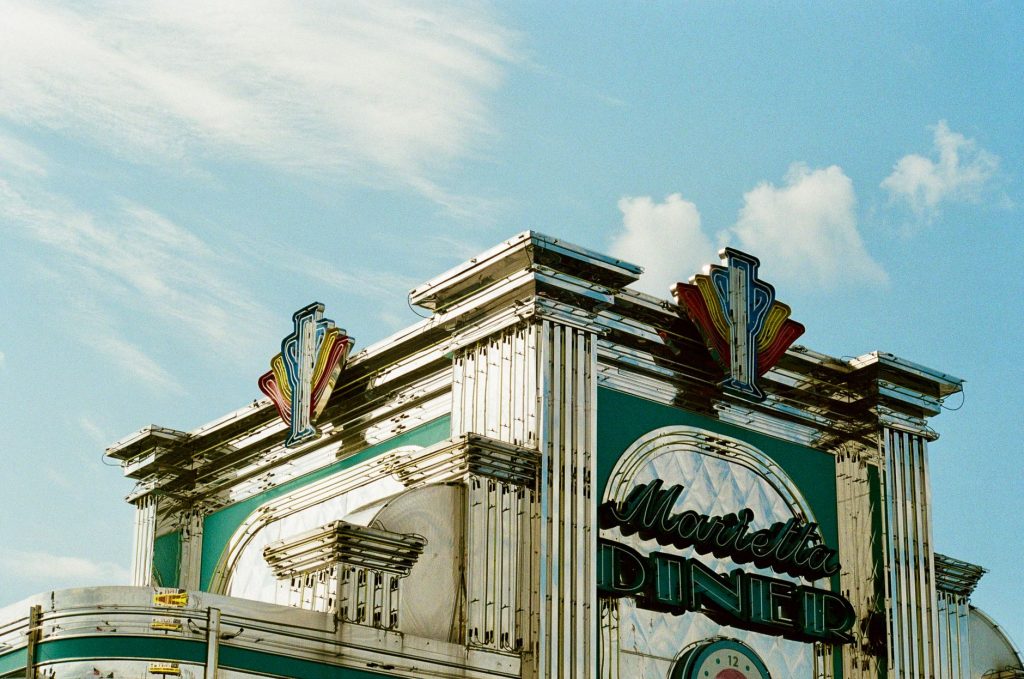
By 6:45 on a Tuesday morning, Mary Coyle already knows what the guy in the window booth wants. He hasn’t looked at a menu since 2019. Two eggs over easy, wheat toast, sausage patties — not links — and a coffee that she’ll refill three times before he finishes his newspaper. She brings it without being asked. That’s how things work at Diamond Diner on South Main Street, where the rhythm of the place is largely set by the people who show up for it every single day.
Diamond Diner sits in a stretch of South Akron that doesn’t get written about much. It’s not part of any downtown revival narrative. There’s no exposed brick, no craft cocktail list, no Instagram wall. What there is: a long counter with swivel stools, a row of booths upholstered in red vinyl, a laminated menu that hasn’t changed dramatically in years, and a short-order kitchen that moves fast and doesn’t fuss. The ceiling is low. The coffee comes in a plain white mug. The place smells like bacon and griddle grease from the moment the door opens.
Mary started working here when her youngest was still in elementary school. She’ll tell you that if you ask, which she will invite you to do, because she talks to everyone. That’s not a performance — it’s just how she operates. She tracks regulars the way a good bartender tracks tabs: who takes cream, who’s on a diet this week, who needs a few minutes before they’re ready to be social. The newer customers, the ones who wander in from the auto shop next door or the tire place down the block, get the same treatment within about two visits.
The food is diner food done right, which means it’s unpretentious and consistent. The biscuits and gravy are heavy and correct. The pancakes come out wide and flat and slightly crisp at the edges. The breakfast burger — a beef patty with a fried egg and American cheese on a griddled bun — is exactly what it sounds like and exactly what it should be. Lunch runs to club sandwiches, chili, soups, and daily specials that skew toward comfort: meatloaf, stuffed peppers, chicken and noodles. Nothing costs much. A full breakfast with coffee lands somewhere around ten to twelve dollars depending on what you order.
On weekends, there’s a wait. Not a long one, but a real one — people standing near the door with their hands in their pockets, checking the counter for open stools. The weekend crowd is different from the weekday regulars. Families come in after church. Younger people show up looking slightly rough and grateful for hot food. But Mary and the rest of the staff absorb the extra traffic without changing speed or losing track of who’s been waiting longest.
What makes a place like this work, decades into its life, isn’t the menu. It’s institutional memory — the accumulated knowledge of what people want and when they want it, and the willingness to actually care about that. Mary carries most of that memory herself. She’s watched kids grow up, seen regulars move away, poured coffee for people going through hard years. The diner is the fixed point. She’s the one who makes it feel like someone’s paying attention.
Diamond Diner opens early — around 6 a.m. on weekdays — and closes by mid-afternoon. Cash is preferred. Parking is easy. Bring a little patience on Sunday mornings, and leave a real tip.