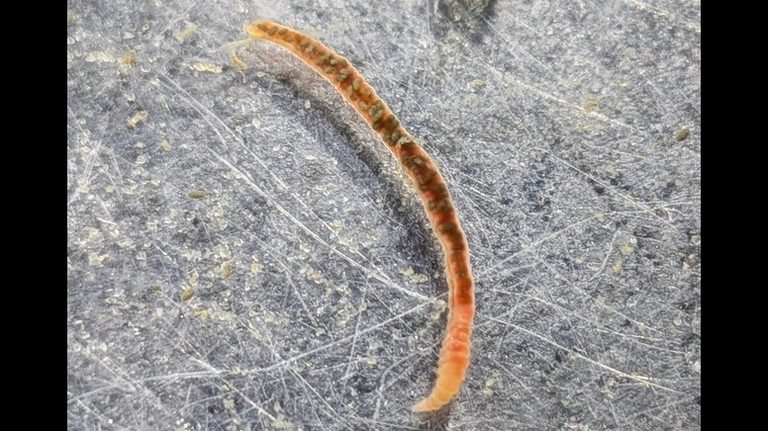
Marineland, FL – The small coastal community of Marineland, better known for its dolphin program, is now gaining attention for a very different kind of marine research. Dr. Elaine Seaver, senior scientist at the University of Florida’s Whitney Laboratory for Marine Science, is leading a project that studies the tiny pink worm Capitella teleta, which can regenerate lost body segments after being cut in half.
Why a worm matters
“It looks a little bit like a miniature earthworm. It’s pink, it’s segmented,” Dr. Seaver explains. The worm lives in many marine environments and possesses a remarkable ability: when the head end remains intact, the tail can grow back, offering a natural model for tissue regeneration.
Seaver believes that by dissecting the cellular and molecular processes that enable this regrowth, scientists can gain insights applicable to human medicine. “If we study animals that are good at replacing lost body parts, and we study them at a high level of detail, going down to the cellular level and the molecular level, we might be able to start understanding how we could help people who have lost body parts,” she says.
From the lab to potential therapies
The research builds on a long tradition of using simple organisms to uncover fundamental biological principles. Discoveries from squid have illuminated neuron function, while studies of horseshoe crabs have informed human peripheral‑vision science. Dr. Seaver hopes the worm will add another piece to that puzzle.
Research technician Kalie Januszkiewicz notes a surprising finding: the worm can regrow a new tail but not a new head, a pattern that differs from other worm species. “Understanding why the genes that control tail regeneration are turned on, and why they are not for the head, could one day be applied to human genetics in the hopes of turning on regeneration genes in people,” Januszkiewicz says.
Local impact and community involvement
The Whitney Lab’s work is part of a broader scientific community in Marineland that includes sea‑urchin and fish studies, as well as the nearby Sea Turtle Hospital’s rehabilitation efforts. The lab welcomes volunteers and students eager to observe the experiments, which often involve carefully cutting worms in half and monitoring their regrowth over days.
“Worms are people, too,” reads a sign in Dr. Seaver’s office, reflecting the team’s belief that even the smallest creatures can teach us about our own biology. The lab also honors Seaver’s contributions with a newly identified worm species, amphiglena seaverae, discovered in a pond on the lab’s grounds.
Looking ahead
While it remains uncertain when these findings might translate into clinical treatments, the research adds valuable knowledge to a century‑old field of regenerative biology. As Dr. Seaver’s team continues to map the genetic pathways that enable regeneration, the hope is that one day the insights gained from a pink marine worm could help heal human injuries and disease.
For those interested in supporting or learning more about the work, the University of Florida provides information on volunteering and visiting the Whitney Laboratory.
Original reporting: Jacksonville Today — read the source article.