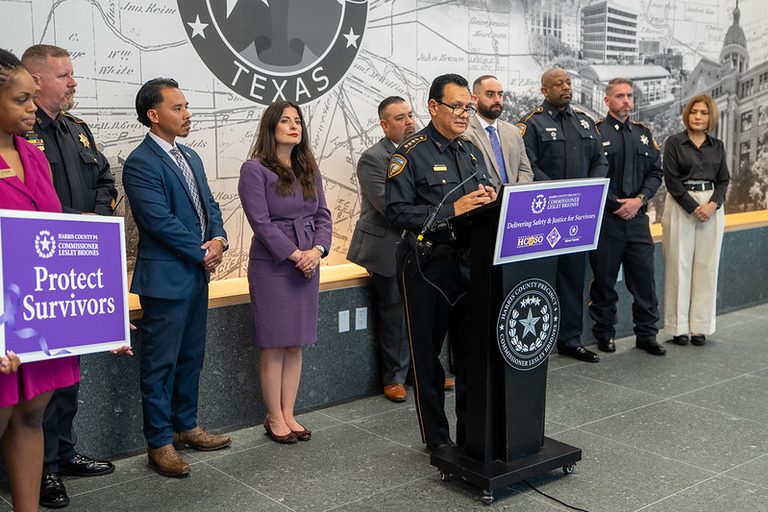
In a move aimed at strengthening public safety and survivor support, Harris County Precinct 4 and the sheriff’s office unveiled a pilot co‑response program on Oct. 1, coinciding with Domestic Violence Awareness Month. The initiative brings together the Violent Persons Warrants Task Force (VIPER) and the Mobile Advocacy Response Team (SMART) to serve warrants on the top 100 family‑violence offenders while simultaneously delivering shelter, counseling and other resources to victims.
How the program works
When a warrant is issued, VIPER deputies locate and serve the offender. At the same time, SMART advocates reach out to the survivor and their family to arrange safe housing, coordinate emergency assistance and connect them with long‑term services. “SMART takes care of the survivor, and VIPER goes after the person who hurt them,” said Harris County Sheriff Ed Gonzalez. “You can’t start rebuilding your life when you’re constantly looking over your shoulder.”
Cases deemed especially dangerous are escalated to the Domestic Violence High‑Risk Team, a collaborative group that includes law‑enforcement officers, prosecutors and survivor‑service providers. This team monitors high‑risk individuals and ensures coordinated responses across agencies.
Resources and staffing
The co‑response team will consist of nine VIPER deputies and nine SMART advocates, according to Precinct 4 Commissioner Lesley Briones. Briones highlighted recent budget approvals that allocate funds for domestic‑violence assistance, public‑safety programs and law‑enforcement initiatives, underscoring the county’s commitment to protecting families.
“This is something happening in our community every day,” Briones said. “We need to speak up, be good neighbors, and make sure we’re doing everything we can as a community to support our survivors and keep Harris County as safe as it can be.”
The need for action
Harris County receives more than 40,000 family‑violence‑related calls each year, and roughly 30 % of the county’s homicides are linked to family violence, according to the release. In unincorporated Precinct 4, family‑violence calls represent the largest share of calls to the sheriff’s office.
Mary McFaden, who oversees the district attorney’s Domestic Violence Bureau, noted that Harris County leads the state in intimate‑partner homicides. “Family violence is not an October crime—it’s every month of the year,” she said.
Looking ahead
The pilot will focus on serving warrants for the top 100 offenders in Precinct 4, with the goal of reducing repeat offenses and providing survivors with the stability they need to rebuild their lives. Officials plan to evaluate the program’s impact and consider expanding the model to other precincts if results prove positive.
Community leaders and faith‑based organizations have expressed support for the initiative, emphasizing the importance of protecting families and upholding the sanctity of marriage and home. As the program gets underway, Harris County hopes the combined law‑enforcement and advocacy approach will set a new standard for how local agencies respond to family‑violence threats.
Original reporting: Community Impact — Houston — read the source article.