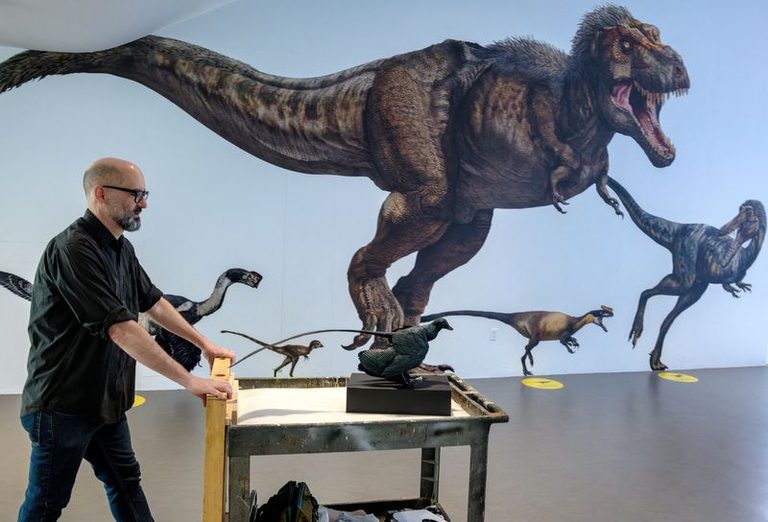
Scientists have long wondered why there were no tiny dinosaurs, and new research may have found the answer. According to a study published in the journal Evolution, early mammals may have prevented dinosaurs from evolving into small body sizes by filling those ecological niches themselves.
The Research
The researchers used mathematical models to explore the evolution of body size across different vertebrate groups. They found that energetics and physiology could account for the sizes of mammals, birds, and turtles, but not for the lack of small dinosaurs.
The study’s authors suggest that because early mammals had already filled the small animal ecological niches, there was no pressure for dinosaurs to evolve into those sizes. This is supported by the fact that the smallest dinosaurs, such as the crow-sized Microraptor, were still much larger than the smallest mammals and birds alive today.
Implications
The findings have implications for our understanding of the evolution of body size in different animal groups. They also highlight the importance of considering the interactions between different species in shaping the evolution of ecosystems.
The researchers note that the absence of tiny dinosaurs means that many ecological niches were closed to them, and that this may have limited their diversity and adaptability. In contrast, the presence of small mammals and birds allowed them to thrive in a wide range of environments.
Original reporting: Appleton, WI News Feed (HLL/CB) — read the source article.